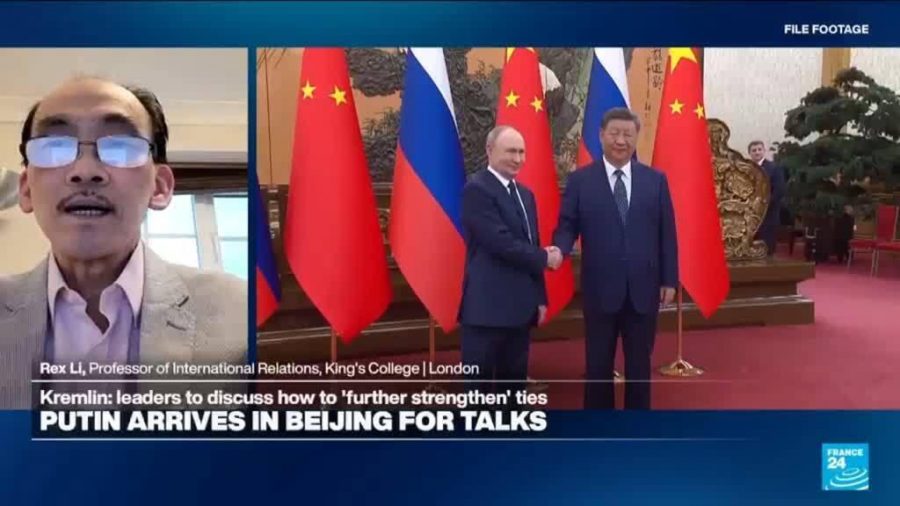
In a world increasingly defined by shifting alliances and geopolitical competition, Russia and China have emerged as key players in the pursuit of a new, multi-polar global order. Speaking to FRANCE 24, Rex Li, a Research Affiliate at the Lau China Institute and Professor of International Relations at King’s College London, shed light on the deepening ties between the two nations and their shared vision for reshaping the balance of global power.
A Warm Reception for Putin in Beijing
During a recent interview, Li highlighted the significant differences in how Chinese leaders have received Russian President Vladimir Putin compared to former U.S. President Donald Trump. “Vladimir Putin has been warmly welcomed by Chinese leaders,” he noted, emphasizing a relationship that has grown closer amidst increased tensions with the West. This warmth, Li explained, is deeply rooted in a shared strategic objective: to challenge the dominance of the U.S.-led global order and foster a multi-polar world.
Shared Goals and Strategic Convergence
The analyst pointed out that both Russia and China have placed a premium on countering Western influence and promoting an alternative framework for global governance. “Russia and China share the same goal of building a multi-polar world and constructing an alternative world order,” Li stated. This vision includes reducing reliance on Western financial systems, promoting their own regional institutions, and asserting influence in areas traditionally dominated by the United States and its allies.
China’s Belt and Road Initiative (BRI) and Russia’s Eurasian Economic Union (EAEU) are two examples of initiatives that align with this broader strategy. Both countries see these projects as tools to expand their influence and create economic networks that rival those of the West. This alignment is not just strategic but also ideological, with both governments advocating for sovereignty and non-interference as cornerstones of international relations.
The Implications for Global Politics
As the United States continues to deepen its alliances in the Indo-Pacific and Europe, the Russia-China partnership could reshape global dynamics. “This is not merely a tactical alignment,” Li explained, “but a long-term vision that seeks to challenge the status quo.” As the two nations strengthen their ties through trade, military cooperation, and diplomatic engagement, they are signaling a united front against what they perceive as Western hegemony.
However, challenges remain. While the partnership appears robust, differing national interests and potential rivalries could test the limits of their cooperation. For instance, China’s growing economic dominance in Central Asia might clash with Russia’s traditional influence in the region. Nevertheless, their shared opposition to the Western-led order provides a strong incentive to maintain a united front.
Looking Ahead
The deepening relationship between Russia and China is already sending ripples through the international community. Their collaborative efforts to create a new global order are likely to have far-reaching consequences, from economic trade routes to military alliances. “The world is witnessing the emergence of a new kind of balance of power,” Li concluded, “and it will require careful navigation from all global players.”
As these two nations continue to align their strategies, the evolving landscape of international relations will be one to watch closely. The question remains: how will other global powers respond to this burgeoning alliance?