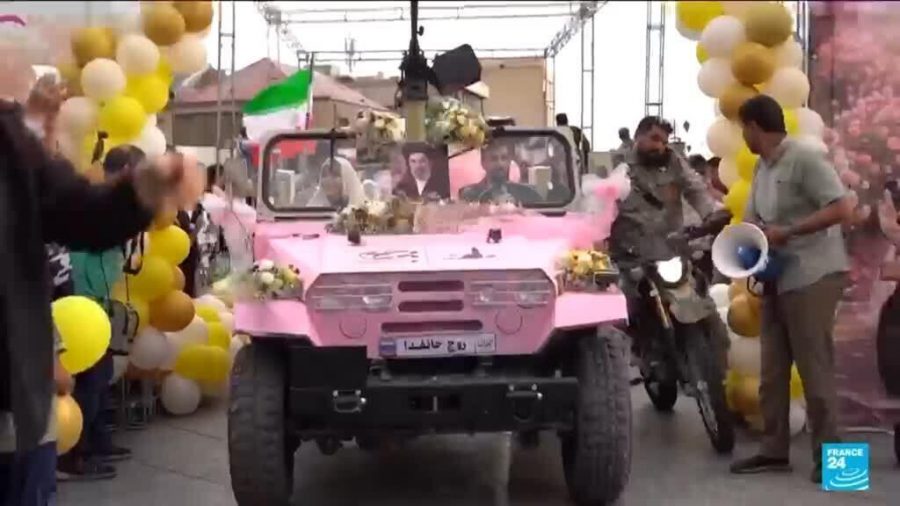
The escalating tensions between the United States and Iran took a dramatic turn this week as both nations exchanged heated threats, with President Donald Trump warning of potential strikes and Iranian officials vowing retaliation. The developments come as Tehran organized mass public weddings for couples who pledged their readiness to sacrifice their lives in conflicts against the U.S. and Israel.
Trump’s Stern Warning
On Tuesday, President Trump reiterated that the U.S. would not hesitate to respond to any provocations from Iran. His statement followed recent attacks in the region that Washington has attributed to Tehran. “We are prepared to act decisively if necessary,” Trump said, reinforcing the administration’s hardline stance on Iran’s activities in the Middle East.
This comes in the wake of heightened tensions that have persisted since the U.S. withdrawal from the 2015 nuclear deal and the subsequent imposition of economic sanctions on Iran. The president’s latest remarks suggest that Washington remains committed to curbing what it views as Tehran’s destabilizing influence in the region.
Tehran’s Response: ‘New Fronts’ of Conflict
Iran, however, has shown no signs of backing down. In a fiery statement, a spokesperson for the Iranian military warned that any U.S. aggression would be met with robust resistance. “We have the capability to open new fronts and make the aggressors regret their actions,” the spokesperson declared, without providing specific details on what such fronts might entail.
Iran’s rhetoric aligns with a broader strategy of showcasing its defiance in the face of international pressure. The country has repeatedly signaled its willingness to escalate tensions if provoked, raising concerns of a broader conflict in the region.
Mass Weddings as a Symbol of Resistance
Amid this volatile backdrop, Iranian authorities orchestrated a striking public display of unity and defiance by holding mass weddings in the capital. Hundreds of couples participated in the state-sponsored events, during which they pledged their readiness to sacrifice their lives in potential conflicts against the U.S. and Israel.
Described as “weddings of martyrdom,” the ceremonies featured couples who had enrolled in a government-backed program designed to promote patriotic and religious fervor. Images from the events showed participants dressed in traditional attire, with many holding signs and banners bearing anti-American and anti-Israeli slogans.
The symbolic gesture underscores the Iranian regime’s efforts to rally domestic support amid mounting economic and geopolitical pressures. By glorifying sacrifice and resilience, Tehran aims to solidify its narrative of resistance against perceived external threats.
International Reactions and Implications
The developments have sparked concerns within the international community, with many fearing that the escalating rhetoric could lead to further instability in the already volatile Middle East. Analysts warn that the situation could spiral out of control if diplomatic channels are not prioritized.
“Both sides appear unwilling to back down, and that’s a dangerous recipe,” said an expert on U.S.-Iran relations. “This is a critical moment for global diplomacy to step in and de-escalate tensions before the situation worsens.”
As the world watches closely, the coming days will prove crucial in determining whether cooler heads will prevail or if the region is on the brink of yet another crisis. For now, the exchange of threats and symbolic gestures continues to dominate headlines, offering little reassurance to a world already fraught with uncertainty.