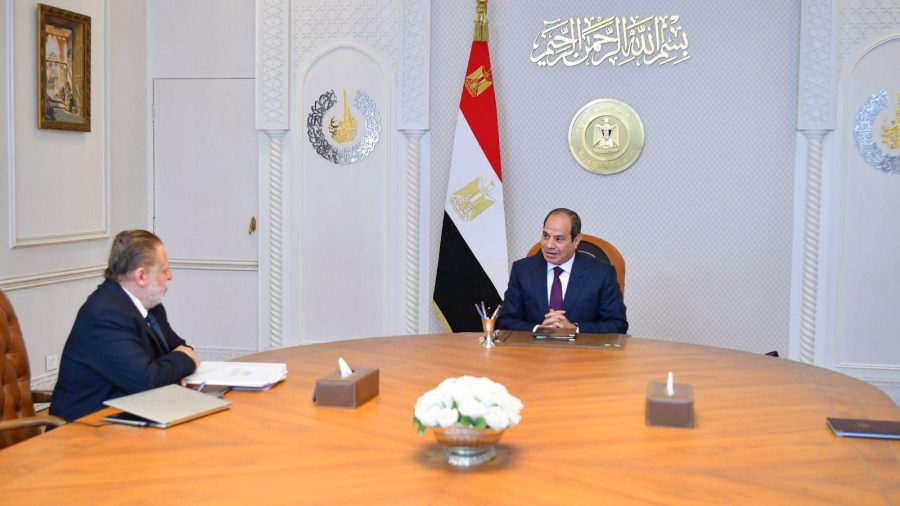
Egyptian President Abdel Fattah Al-Sisi convened a high-level meeting with Hassan Abdalla, Governor of the Central Bank of Egypt (CBE), to address critical economic challenges including inflation, foreign currency reserves, and the nation’s broader economic performance. The discussions come at a time when Egypt faces mounting pressures from regional geopolitical tensions, which threaten to disrupt capital flows and external balances.
Economic Reform Programme Under Scrutiny
A statement from the presidency underscored the importance of the meeting, highlighting its focus on Egypt’s ongoing economic reform programme. This initiative is aimed at mitigating the adverse effects of inflation and bolstering economic resilience amid global uncertainties. President Al-Sisi emphasized the need for proactive measures to sustain growth and maintain financial stability, particularly in light of the volatile regional environment.
Record Foreign Currency Reserves
One of the key points of discussion was Egypt’s record-high foreign currency reserves. These reserves serve as a buffer against economic shocks, providing the government with the financial flexibility to navigate turbulent times. President Al-Sisi and Governor Abdalla explored strategies to optimize the use of these reserves, ensuring they contribute to stabilizing the Egyptian pound and supporting import-dependent sectors.
- Inflation Trends: The meeting analyzed inflation dynamics, identifying both domestic and international drivers.
- Capital Flows: Officials reviewed capital inflow trends, aiming to attract foreign investment despite global uncertainties.
- Regional Conflicts: The impact of geopolitical tensions on Egypt’s economic landscape was a central theme.
Geopolitical Tensions and Their Ripple Effects
Regional conflicts continue to pose significant challenges to Egypt’s economy, affecting trade routes, energy prices, and investor sentiment. The leadership is keen on implementing measures to shield the economy from external shocks while maintaining progress on internal reforms. Analysts suggest that Egypt’s ability to address inflation and sustain reserves will be crucial in navigating these turbulent times.
As Egypt moves forward, the outcomes of this strategic meeting are expected to shape the nation’s economic trajectory, reinforcing its position as a resilient player in the Middle East’s complex economic landscape.