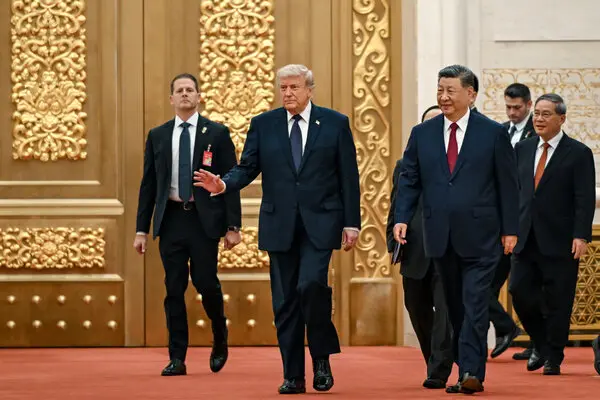
US President Donald Trump’s recent visit to Beijing has ignited conversations about America’s shifting place in global politics, raising questions about whether Washington is acknowledging the dawn of a post-unipolar world. The trip, marked by carefully choreographed meetings and diplomatic gestures, served as more than a typical state visit; it was a subtle yet significant moment that may signal a recalibration of the United States’ geopolitical strategy.
Signs of a Changing World Order
For decades, the United States has enjoyed a position of unparalleled dominance in international affairs, often described as a unipolar world. However, recent developments—including China’s rapid economic growth, its expanding influence in global trade, and its assertive moves in geopolitics—have challenged this status quo. Analysts argue that Trump’s visit to Beijing reflects an emerging reality: Washington may be quietly acknowledging the necessity of adapting to a multipolar global order.
The Power of Symbolism in Diplomacy
While official statements from the White House have downplayed the visit’s significance, political observers have been quick to analyze the subtleties of the trip. Timing, tone, and even the phrasing of diplomatic language can offer clues about underlying geopolitical strategies. Trump’s engagement with Chinese President Xi Jinping was characterized by mutual respect and measured dialogue, a marked departure from the confrontational rhetoric that has occasionally defined US-China relations.
- Timing Matters: The visit came amid escalating tensions in the Indo-Pacific region, where nations are vying for influence.
- Language of Cooperation: Statements emphasized partnership and mutual benefit, signaling a potential shift in approach.
- Denial as Strategy: Trump’s official denial of requesting specific concessions may itself be a calculated move to maintain leverage.
These elements, often overlooked, are critical in understanding the broader implications of such a high-profile diplomatic engagement.
Global Implications
The trip has sparked widespread debate among policymakers, academics, and analysts. Many argue that the United States might be preparing to navigate a more complex world where power is distributed among multiple nations rather than concentrated in Washington. Others contend that Trump’s visit may simply be a tactical maneuver rather than a paradigm shift in foreign policy.
Regardless of the intent, the visit underscores the growing importance of China in global affairs. Beijing’s Belt and Road Initiative, its investments in emerging markets, and its steady military modernization have collectively positioned it as a formidable player on the world stage. Whether or not Washington formally recognizes this shift, the reality is becoming increasingly undeniable.
Conclusion: A New Era in International Relations?
Trump’s visit to Beijing is more than a fleeting headline; it is a moment that invites reflection on the evolving dynamics of global power. As the world moves further away from unipolarity and closer to multipolarity, nations will need to adapt to a landscape marked by shared influence and complex interdependence. For the United States, the question remains: will it lead in shaping this new order, or will it resist the tides of change?
In the silent details of diplomatic visits like these, history is often written—not with bold declarations, but with subtle shifts that redefine the narrative of international relations.