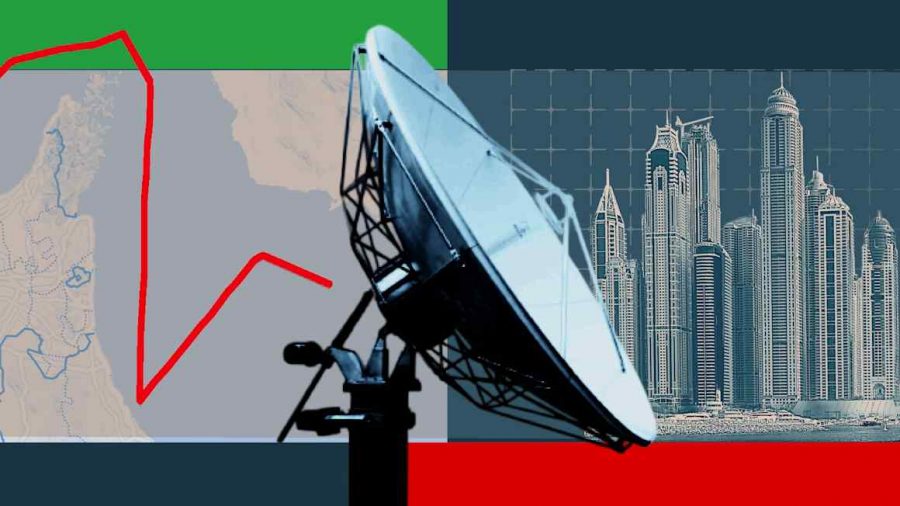
New evidence has revealed that Iran’s Revolutionary Guards utilized a company based in the United Arab Emirates (UAE) to acquire military satellite technology, raising questions about covert procurement networks in the region. The transaction is part of a larger web of operations that later saw Tehran targeting the Gulf nation with missile and drone attacks, according to records reviewed by the Financial Times.
Covert Procurement Network Uncovered
The documents indicate that Iranian operatives relied on a UAE-based intermediary to sidestep sanctions and secure advanced satellite equipment for military applications. The company, whose name remains undisclosed, was reportedly an unwitting participant in the scheme, which is part of Iran’s broader strategy to circumvent international restrictions.
The UAE, a key U.S. ally in the Middle East, has long been under scrutiny for its role as a commercial hub where foreign businesses and entities often interact. This revelation underscores the challenges that Gulf nations face in policing illicit activities conducted under the guise of legitimate trade.
A Troubling Timeline
The relationship between Tehran and Abu Dhabi has alternated between cautious diplomacy and open hostility. Despite its use of the UAE as a channel for acquiring restricted technology, Iran later targeted the Gulf state with ballistic missiles and drone strikes, escalating tensions in the region.
Experts believe this dual approach signifies a calculated strategy by the Islamic Revolutionary Guard Corps (IRGC) to exploit economic opportunities while pursuing aggressive military policies. The irony of these attacks lies in the fact that the very nation assisting Iran’s technological advancements inadvertently became a target of its aggression.
Regional Implications
The revelations come at a time when the Middle East is already grappling with heightened geopolitical tensions. Iran’s actions not only undermine the trust between neighboring nations but also complicate ongoing international negotiations aimed at curbing its nuclear and military activities.
The UAE has consistently sought to project itself as a global trade hub and a neutral player in regional conflicts. However, incidents like this highlight the vulnerabilities associated with its open-market policies, particularly when dealing with nations under international sanctions.
Global Response
The international community, led by the United States, has previously imposed stringent sanctions on Iran to prevent it from acquiring advanced military technologies. These new findings may prompt calls for tighter monitoring of trade activities in Gulf states, especially those involving high-tech equipment with potential military applications.
While both Iran and the UAE have refrained from commenting on the matter, the situation underscores the importance of robust regulatory frameworks and international cooperation to prevent the misuse of commercial networks for illicit purposes.
Looking Ahead
As the world grapples with the implications of this discovery, the focus will likely shift to enhancing oversight mechanisms within the region to prevent similar incidents. For the UAE, this may involve revisiting trade policies and tightening controls to ensure that its role as a global business hub is not exploited for nefarious purposes.
For Iran, the exposure of such covert operations could further isolate the country on the global stage while providing its adversaries with additional leverage in ongoing diplomatic efforts to curb its military ambitions.