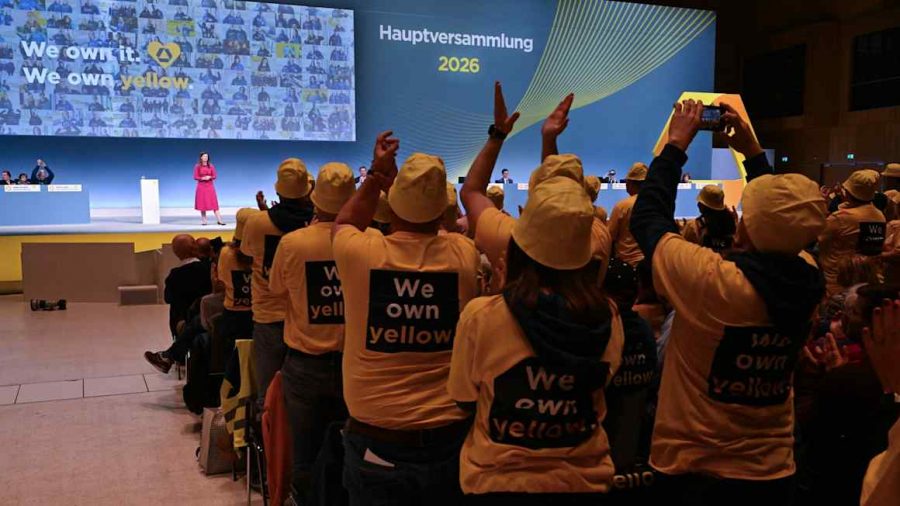
German banking giant Commerzbank has found itself at the center of an intense push for independence as it seeks to stave off potential acquisition efforts by Italy’s UniCredit. At its annual meeting this week, the beleaguered lender offered a glimmer of hope to its long-suffering shareholders, who are rallying behind the management’s vision for a standalone future.
A Renewed Vision for Commerzbank
The annual general meeting (AGM) served as a pivotal moment for Commerzbank, which has faced years of turbulence. Shareholders, many of whom have endured stagnant share prices and dwindling profits, were met with a more optimistic outlook from the bank’s leadership. Chief Executive Officer Manfred Knof outlined a strategic roadmap focused on digital transformation, cost-cutting measures, and improving customer experience.
“We understand the challenges we’ve faced, but we are confident that Commerzbank is on the path to sustainable growth,” Knof stated. His remarks were met with applause from attendees, signaling renewed confidence in the bank’s leadership and its ability to chart an independent course.
Shareholder Support in the Face of Takeover Rumors
Speculation about a potential takeover by UniCredit has been circulating in financial circles for months. The Italian lender, one of Europe’s largest banks, has reportedly eyed Commerzbank as a strategic acquisition to expand its footprint in Germany, Europe’s largest economy. However, Commerzbank’s leadership has firmly rejected the notion of a merger, emphasizing the importance of maintaining autonomy.
Shareholders echoed this sentiment during the AGM. “Commerzbank has a proud history and a vital role to play in the German banking sector,” said one investor. “We cannot allow foreign interests to dictate our future.” The show of solidarity among stakeholders underscored the broader resistance to UniCredit’s ambitions.
Challenges Ahead for Commerzbank
Despite the optimistic tone of the meeting, Commerzbank’s road to recovery is far from certain. The bank continues to grapple with fierce competition, a low-interest-rate environment, and the lingering effects of the COVID-19 pandemic. Additionally, the specter of greater consolidation in the European banking sector looms large, with regulators and market conditions favoring larger, multinational institutions.
Commerzbank has taken steps to address its challenges, including the closure of hundreds of branches and a renewed focus on digital banking services. These measures have sparked hope among investors, but analysts caution that the bank must deliver tangible results to keep potential suitors like UniCredit at bay.
The Broader Implications for European Banking
Commerzbank’s fight for independence carries significant implications for the European banking sector. A potential merger with UniCredit would create a financial behemoth, reshaping the continent’s competitive landscape. However, it could also raise questions about market dominance and the impact on customers and employees.
The German government, which holds a 15% stake in Commerzbank, has so far refrained from publicly commenting on the takeover rumors. Analysts believe Berlin’s stance could prove decisive in determining the bank’s future. “The government’s role as a stakeholder is a critical factor. Their support for Commerzbank’s independence could send a strong signal to the market,” said a financial expert.
Looking Ahead
As Commerzbank charts its path forward, the support of its shareholders will be crucial. The optimism displayed at the AGM suggests that investors are willing to back the bank’s leadership in its quest for independence. However, with challenges on the horizon and potential acquirers circling, the battle for Commerzbank’s future is far from over.
For now, the German lender has managed to rally its shareholders and present a united front. Whether this will be enough to fend off UniCredit remains to be seen, but one thing is clear: Commerzbank’s fight for independence is a defining moment not just for the bank, but for the European banking sector as a whole.