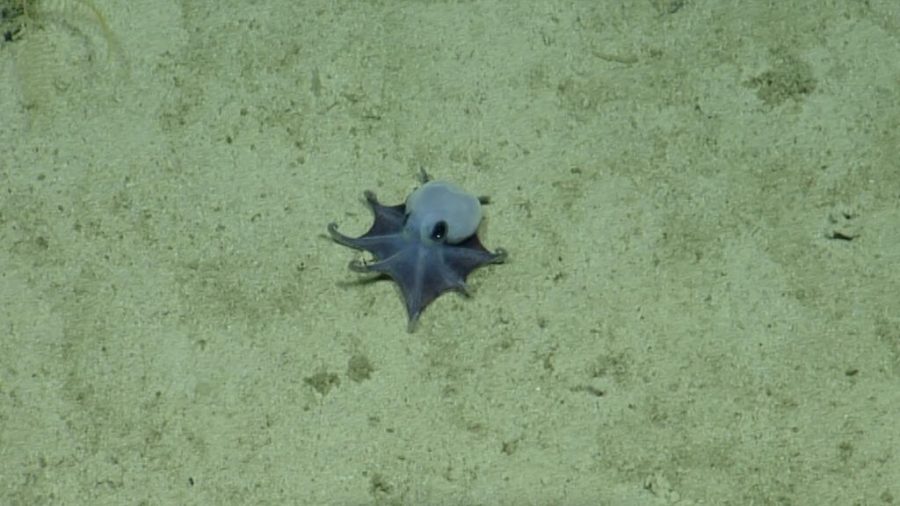
In a groundbreaking discovery, scientists have identified a new species of octopus nearly 1,800 meters beneath the surface of the ocean near the Galapagos Islands. Dubbed Microeledone galapagensis, this diminutive, cerulean-hued cephalopod is a remarkable addition to marine biology, not only for its size but for its striking and exceptionally rare coloration.
Unearthing a Hidden Gem of the Deep
The discovery was made by a team of researchers from the Charles Darwin Foundation, who were conducting deep-sea explorations in the waters surrounding the Galapagos Islands. The archipelago, known for its astonishing biodiversity and its role in shaping Charles Darwin’s theory of evolution, has once again proven to be a treasure trove of scientific revelations. This time, the spotlight is on a tiny octopus that has captivated researchers and ocean enthusiasts alike.
The standout feature of Microeledone galapagensis is its vivid blue coloration, a trait that is believed to be one of the rarest in nature. The octopus’s vibrant, almost otherworldly hue provides an intriguing subject for further research into the evolutionary advantages of its unique pigmentation. This discovery not only enriches our understanding of deep-sea ecosystems but also underscores the importance of continuing to explore the largely uncharted depths of our oceans.
Why Blue is so Rare in Nature
The color blue is notoriously uncommon in the natural world. Unlike other colors that result from pigmentation, blue hues are often created through structural coloration, where the physical structure of an organism’s surface interacts with light to produce the color. This makes the presence of a blue octopus all the more extraordinary.
While the exact purpose of Microeledone galapagensis‘s cerulean shade remains unclear, scientists speculate it could serve as a form of camouflage in the dimly lit depths or play a role in mating and communication. Understanding these mechanisms could offer valuable insights into the evolutionary pressures faced by marine organisms living in extreme environments.
A Call to Protect Deep-Sea Biodiversity
As humans venture deeper into the ocean, discoveries like Microeledone galapagensis remind us of how much remains unknown about our planet’s underwater realms. The Galapagos region, already celebrated for its ecological importance, continues to yield findings that highlight the need for conservation efforts to protect these fragile ecosystems.
Microeledone galapagensis is not just a scientific marvel but also a symbol of the mysteries that lie beneath the waves. With threats such as climate change, overfishing, and deep-sea mining looming large, safeguarding habitats like those around the Galapagos Islands is crucial for preserving Earth’s biodiversity.
The Road Ahead
The discovery of this tiny blue octopus opens new avenues for research into deep-sea life, from its unique adaptations to its ecological role. It also serves as a poignant reminder of the importance of exploration and conservation. As scientists continue to uncover the secrets of the ocean’s depths, one thing is certain: the more we explore, the more we realize just how much there is left to learn.
For now, Microeledone galapagensis stands as a testament to the resilience and diversity of life in one of the planet’s most challenging environments—offering a glimpse into a world that remains largely hidden from view.