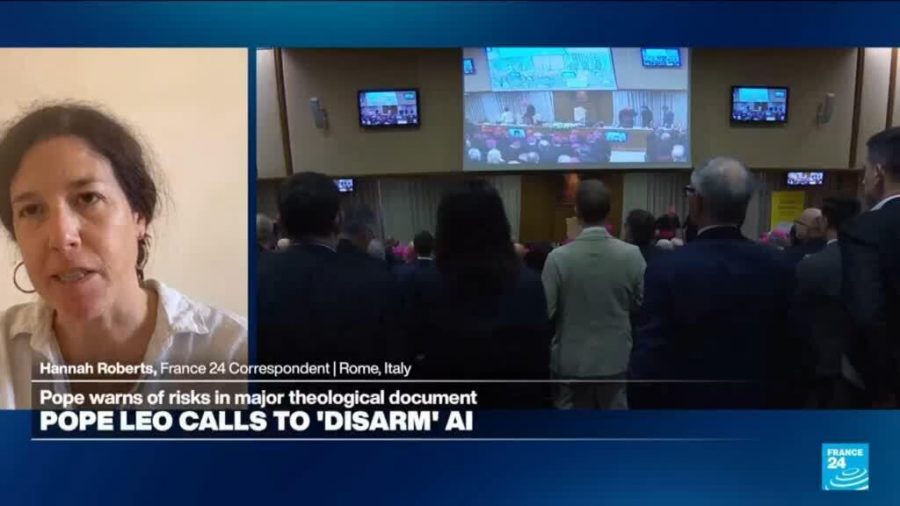
Vatican City — In a historic moment for both the Catholic Church and the global technology community, Pope Leo XIV unveiled his first encyclical on Monday, addressing the profound implications of artificial intelligence (AI) on humanity. The document, titled “Veritas ex Machina”, or “Truth from the Machine,” outlines the Pope’s vision for fostering a harmonious relationship between technological advancements and human dignity.
Pope Leo XIV Calls for Ethical AI Development
Marking a departure from traditional papal encyclicals that focus on theological and moral issues, this document is a groundbreaking exploration of the ethical challenges posed by AI. Speaking at the Vatican’s Apostolic Palace, Pope Leo XIV emphasized the need to approach AI with a balance of innovation and responsibility.
“Artificial intelligence has the potential to serve as a powerful tool for the common good,” the Pope stated. “But without a moral compass, it risks becoming a force of division and harm.”
A Collaborative Effort with AI Experts
In an unprecedented move, the encyclical was presented alongside Chris Olah, a prominent AI researcher from Anthropic, a company specializing in AI safety and ethics. The collaboration appeared to signal the Pope’s desire to bridge the gap between the tech community and broader society.
Olah remarked on the significance of the event, saying, “The challenges AI presents are deeply intertwined with questions of moral responsibility. It’s heartening to see such a prominent voice advocate for a thoughtful and inclusive approach.”
Key Themes of the Encyclical
The encyclical emphasizes several key principles to guide the development and application of artificial intelligence:
- Human Dignity: AI must be designed and deployed in ways that uphold the inherent worth of every individual.
- Global Equity: Efforts should be made to ensure that AI benefits all nations and communities, particularly those that are underrepresented in technological advancements.
- Transparency: The development of AI systems should be transparent and accountable to avoid misuse or harm.
- Interdisciplinary Dialogue: Collaboration between theologians, ethicists, scientists, and technologists is crucial in navigating the ethical challenges of AI.
The Pope’s message also includes a cautionary note about the risks of unchecked technological progress. He warned against AI systems being exploited for manipulation, surveillance, or other purposes that undermine human freedom.
A Call to Action for the Global Community
In his encyclical, Pope Leo XIV urged global leaders, researchers, and citizens to engage in open dialogue about the ethical implications of AI. The document includes an appeal to governments and corporations to prioritize ethical considerations alongside economic and technological goals.
“We must remember that technology is a means, not an end,” the Pope wrote. “Our shared humanity must remain at the center of all innovation.”
The document has already sparked widespread discussion, with religious leaders, ethicists, and tech experts weighing in on its implications. Many view it as a pivotal moment in the ongoing conversation about the role of artificial intelligence in society.
As the world grapples with the rapid advancements in AI technology, Pope Leo XIV’s encyclical serves as a timely reminder of the need for a moral framework to guide its development. By bringing together voices from diverse disciplines, the Pope has taken a significant step toward fostering a future where AI serves humanity rather than undermining it.