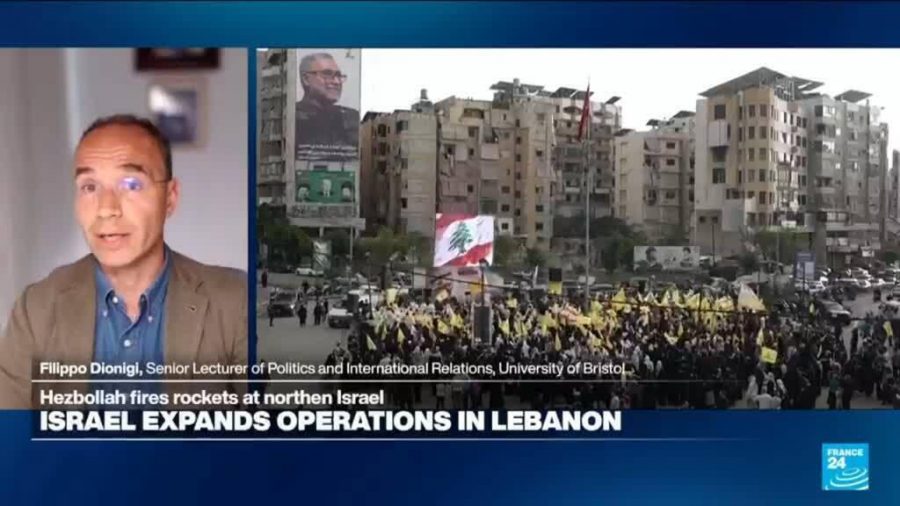
The Middle East is on high alert as Israeli forces have pushed deeper into southern Lebanon, seizing key locations such as Beaufort Castle, a move that holds significant symbolic resonance in the history of the conflict. This escalation comes as the most extreme right-wing fringes of the Netanyahu government call for far greater military action in Lebanon.
Background to the Conflict
To understand the current situation, it’s essential to delve into the complex and often tumultuous relationship between Israel and Lebanon, particularly the role of Hezbollah, a Shia Islamist political party and militant group based in Lebanon. The conflict between Israel and Hezbollah has been ongoing for decades, with both sides experiencing periods of heightened tension and violence.
Expert Insights
Nadia Massih recently had the opportunity to speak with Dr. Filippo Dionigi, a Senior Lecturer of International Relations specialized in Middle Eastern politics at the University of Bristol. Dr. Dionigi provided valuable insights into the motivations behind Israel’s current military campaign, directed at Hezbollah, and the broader implications for the region.
According to Dr. Dionigi, the seizure of Beaufort Castle is more than just a strategic military move; it carries powerful symbolic weight. Beaufort Castle has played a significant role in the history of the conflict, and its capture by Israeli forces is seen as a significant blow to Hezbollah.
Military Campaign and Civilian Suffering
The military campaign is not only directed at Hezbollah but also seeks to exert pressure on the Lebanese population through widespread civilian suffering and forced displacement. Over a million Lebanese have been displaced, with many more facing the harsh realities of war, including lack of access to basic necessities like food, water, and healthcare.
The use of civilian suffering as a weapon of war is a highly controversial tactic, with many in the international community condemning such actions. The humanitarian crisis unfolding in Lebanon is dire, with the potential for long-term consequences for the country and its people.
International Response
The international community has been called upon to respond to the escalating conflict, with many nations urging restraint and a return to diplomatic efforts to resolve the crisis. The United Nations has played a key role in attempting to broker peace, but so far, a lasting resolution has proven elusive.
Key Points to Consider:
- The current conflict between Israel and Hezbollah is part of a long-standing and complex issue, with both sides having experienced periods of heightened tension and violence.
- The seizure of Beaufort Castle by Israeli forces holds significant symbolic resonance and is seen as a strategic military move.
- The military campaign is directed not only at Hezbollah but also at exerting pressure through civilian suffering and forced displacement.
- The international community has condemned the use of civilian suffering as a weapon of war and is urging restraint and a return to diplomatic efforts.