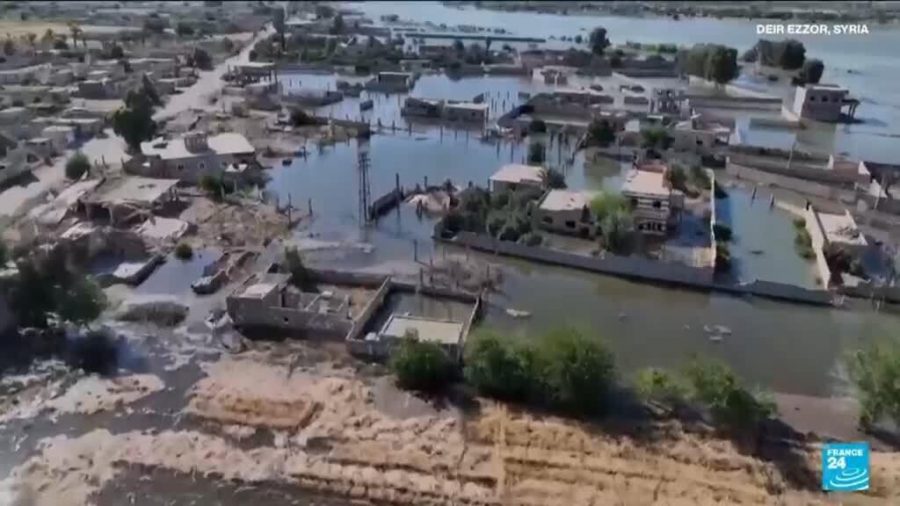
Floodwaters have devastated eastern Syria, particularly the province of Deir Ezzor, as the Euphrates river has risen to unprecedented levels. The sudden and severe flooding has left a trail of destruction in its wake, with entire villages and farmland completely submerged in water.
The Cause of the Flooding
The Euphrates river, which originates in Turkey, has been the lifeblood of the region for centuries. However, in recent days, the river has burst its banks, causing widespread flooding and displacement. The exact cause of the flooding is still unclear, but experts point to a combination of heavy rainfall and the release of water from dams in Turkey as possible factors.
Affected Areas and Population
The province of Deir Ezzor has been severely hit by the flooding, with thousands of residents forced to leave their homes and seek shelter elsewhere. The flooding has also affected the local economy, with farmland and crops destroyed, and livestock killed or displaced. The full extent of the damage is still being assessed, but it is clear that the flooding will have a significant impact on the region.
Response and Relief Efforts
The Syrian government has responded to the crisis by deploying emergency services and aid to the affected areas. However, the response has been hindered by the lack of resources and infrastructure in the region. International organizations and NGOs are also providing assistance, including food, shelter, and medical care to those affected by the flooding.
Challenges and Concerns
One of the major challenges facing the relief efforts is the lack of access to the affected areas. The flooding has made many roads impassable, and the lack of infrastructure in the region is making it difficult to deliver aid to those who need it most. There are also concerns about the potential for waterborne diseases, such as cholera and typhoid, which could spread quickly in the affected areas.
- The Syrian government has established a number of shelters for those displaced by the flooding
- International organizations are providing food, shelter, and medical care to those affected
- The lack of access to the affected areas is hindering the relief efforts
- There are concerns about the potential for waterborne diseases in the affected areas
Long-term Consequences
The flooding in eastern Syria will have long-term consequences for the region. The destruction of farmland and crops will have a significant impact on the local economy, and the displacement of thousands of people will put a strain on the already limited resources in the region. The international community must come together to provide support and assistance to those affected by the flooding, and to help the region recover from this devastating disaster.