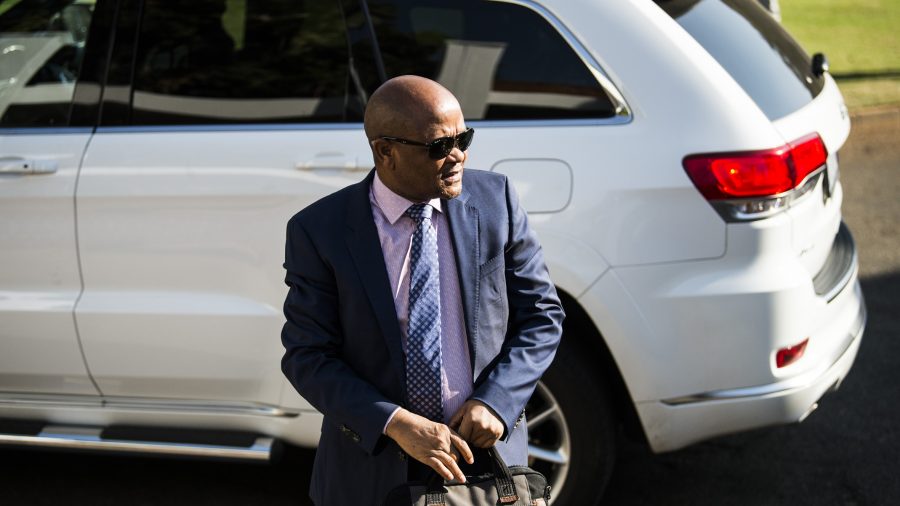
Suspended Police Minister Senzo Mchunu Challenges Parliamentary Committee Report
Suspended Police Minister Senzo Mchunu has taken a bold stand against a draft report produced by the evidence leaders of parliament’s ad hoc committee, alleging that its findings preempt the ongoing investigation and infringe upon his legal rights.
Legal Objections Raised
Parliament’s legal adviser, Andile Tetyana, confirmed that Mchunu’s legal team had formally objected to the contents of the evidentiary overview prepared by the committee’s evidence leaders. “At the heart of his correspondence is an allegation that, in presenting their evidentiary overview, the evidence leaders have pre-empted this process by making findings across the entire scope of the terms of reference,” Tetyana explained. This assertion highlights Mchunu’s concerns regarding the integrity and impartiality of the committee’s proceedings.
Controversial Directive Under Scrutiny
The evidence leaders concluded in their overview that Mchunu acted outside his constitutional and legal boundaries when he issued a directive in December 2024 to disband the political killings task team. Notably, this directive was executed without consulting key stakeholders, including the president, the national police commissioner, the National Prosecuting Authority, or the State Security Agency.
Mchunu’s attorneys argue that the evidence leaders have overstepped their mandate by effectively assuming the role of decision-makers, which they claim is prejudicial to Mchunu’s rights. Tetyana conveyed the lawyers’ position: “They argue that it is impermissible for the evidence leaders to step into the shoes of the committee and become decision-makers, particularly in circumstances where no party has been afforded the right to make submissions.”
Background of the Inquiry
The controversy surrounding Mchunu intensified when President Cyril Ramaphosa placed him on special leave in 2025. This decision followed a high-stakes briefing by KwaZulu-Natal Police Commissioner Nhlanhla Mkhwanazi in July, which exposed serious allegations and ultimately led to the establishment of both the ad hoc parliamentary inquiry and the Madlanga commission.
The inquiry is focused on claims that Mchunu acted improperly in ordering the disbandment of the political killings task team, with the report indicating potential misconduct on his part, including allegations that he misled parliament regarding the reasons for disbanding the unit.
Defense of the Evidence Leaders’ Role
Tetyana defended the role of the evidence leaders, describing them as independent legal professionals who are crucial in assisting the committee. He emphasized that evidence leaders operate as a support mechanism, summarizing complex documents, identifying discrepancies, and empowering committee members—many of whom are not lawyers—to make informed and credible decisions.
“The evidentiary overview was not a committee report but rather a summary of the evidence collected during the inquiry,” Tetyana asserted. He further clarified that the overview organizes raw documents and testimonies into a coherent record, asserting that referring to the document presented on May 28 as a final report of the committee is a mischaracterization.
Importantly, Tetyana noted that the committee had yet to deliberate on the evidentiary overview, and a provisional report would only be generated once the committee members had thoroughly considered the evidence presented.
Implications for Mchunu and the Inquiry
The ongoing legal battle over the committee’s report underscores the complexities and sensitivities surrounding this high-profile inquiry. As Mchunu continues to challenge the findings, the implications for his political future and the broader accountability within the South African police force remain uncertain.
As the inquiry progresses, all eyes will be on the parliamentary committee to see how they navigate the legal objections raised and whether they maintain the integrity of their investigation amid these challenges.