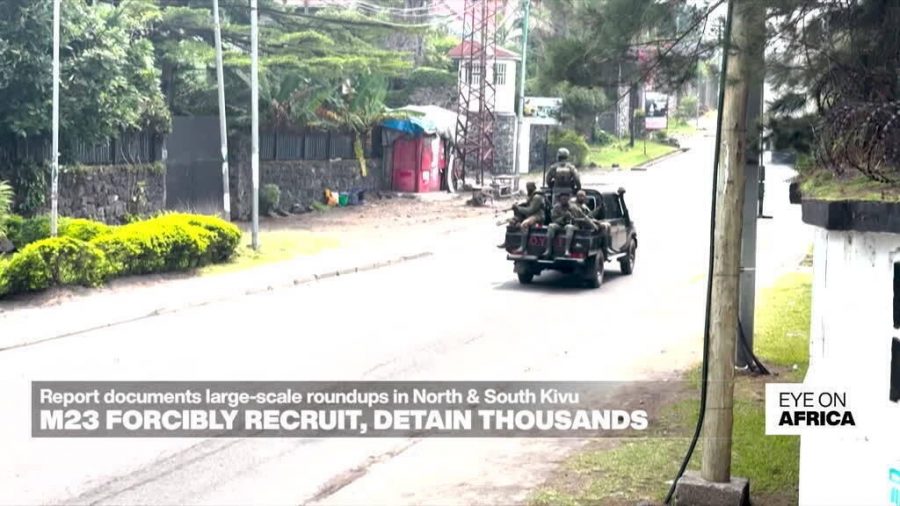
M23 Fighters’ Brutality Uncovered in DRC: A Human Rights Watch Report
A recent report by Human Rights Watch has revealed alarming evidence of systemic human rights abuses carried out by the M23 militia in eastern Democratic Republic of the Congo (DRC). The report highlights the mass forced recruitment of civilians, including minors, and widespread detentions that have left thousands suffering in dire conditions.
Forced Recruitment and Detention
The M23, a group widely believed to be backed by Rwanda, has been accused of forcibly recruiting individuals from villages, creating a climate of fear and uncertainty among local populations. Eyewitness accounts detail how armed fighters have been going door-to-door, taking young men and boys under the pretense of protecting communities from violence. Many of these recruits are never seen again, while others are subjected to brutal training and coerced into fighting.
According to the report, the militia has also established makeshift detention centers where individuals are held without charge. Survivors recount horrific experiences of physical abuse, torture, and inhumane living conditions, further underscoring the urgent need for international intervention.
The Human Cost of Conflict
The ongoing conflict in the DRC has already resulted in millions of displaced individuals, and the actions of the M23 have exacerbated this humanitarian crisis. As communities struggle to cope with the violence, food insecurity and access to basic health services have dramatically declined. The report calls for immediate action from the international community, urging governments to hold accountable those responsible for these violations.
Xenophobic Protests in Durban
In a separate but equally troubling development, thousands of foreign nationals in Durban, South Africa, are currently protesting outside the Department of Home Affairs. Many of these individuals were driven from their homes during recent xenophobic protests, facing violence and discrimination. The situation has created a humanitarian crisis as families find themselves without shelter or basic necessities.
Local NGOs are working tirelessly to provide aid, but the scale of the issue is overwhelming. Activists are calling for a more compassionate response from the South African government to protect vulnerable foreign nationals and address the root causes of xenophobia.
Omar Abdulkadir Artan’s World Cup Dream Cut Short
In sports news, Somali referee Omar Abdulkadir Artan recently returned to his home country to a hero’s welcome after being selected for the World Cup officiating team. However, his dream was abruptly halted when he was denied entry to the United States, where the tournament is set to take place. The news has sparked outrage among fans and fellow referees, who view this as a significant blow to his career and an injustice to a dedicated professional.
Artan, who had trained rigorously for this opportunity, expressed his disappointment in a heartfelt statement, emphasizing the importance of inclusivity in sports. His story has resonated with many, shedding light on the challenges faced by athletes from conflict-affected regions.
Conclusion
The reports from DRC and South Africa highlight a troubling pattern of violence and discrimination that affects vulnerable populations around the world. As the international community grapples with these issues, it is crucial to amplify the voices of those who are suffering and advocate for meaningful change.