From Racing to Rockets: The Unlikely Connection
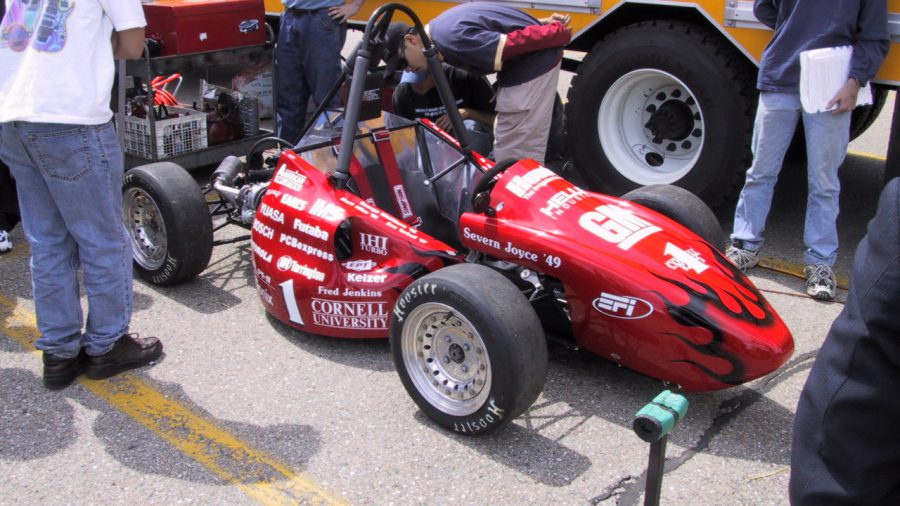
In the fast-paced world of aerospace innovation, the journey from college car-racing to interstellar exploration may seem like a leap. Yet, for many leaders at SpaceX, their foundation in engineering was forged in the competitive environment of Cornell University’s Formula SAE racing team.
The Birth of a Passion
For these engineers, the road to success began not in a high-tech lab but on the racetrack. The Formula SAE program at Cornell University allows students to design, build, and compete with small formula-style race cars. This hands-on experience cultivates a unique blend of theoretical knowledge and practical application, essential for any aspiring engineer.
Ties that Bind: Cornell’s Formula SAE Team
Many of SpaceX’s top engineers participated in Cornell’s racing club, where they were not just students but passionate contributors to a project that demanded creativity, teamwork, and resilience. The rigorous challenges of building a race car from the ground up taught them invaluable lessons in problem-solving and innovation.
Teamwork and Collaboration
The environment of the racing team encourages collaboration, where students must work closely together to overcome mechanical failures, design flaws, and tight deadlines. These experiences mirror the collaborative culture at SpaceX, where complex aerospace challenges require input from multidisciplinary teams.
Skills That Propel Innovation
At Cornell, team members learn about aerodynamics, materials science, and vehicle dynamics, all of which are directly applicable to aerospace engineering. The ability to apply theoretical concepts to real-world problems is a hallmark of the education provided by the Formula SAE program, setting its members apart in the competitive tech landscape.
SpaceX: Where Education Meets Opportunity
SpaceX, founded by Elon Musk in 2002, has revolutionized space travel and exploration. The company’s mission to make space travel more affordable and accessible is fueled by a workforce that thrives on innovation and creativity. Many of the engineers at SpaceX credit their time in the Cornell racing club as pivotal in their development as problem solvers and innovators.
Real-World Applications: From Race Cars to Rockets
The transition from racing to rocket engineering is not as distant as one might think. Both fields demand a thorough understanding of physics, mechanics, and engineering principles. In racing, engineers must optimize performance and safety, while in aerospace, they push the envelope of technology to ensure successful launches and missions.
A Legacy of Excellence
The Cornell Formula SAE team has produced numerous successful engineers who have gone on to work at leading tech companies, including SpaceX. As these alumni move into influential positions in the industry, they carry with them the skills and experiences gained on the racetrack, driving innovation in their respective fields.
The Future of Engineering Education
The success stories of SpaceX engineers showcase the importance of experiential learning in engineering education. As more universities adopt hands-on programs akin to Cornell’s Formula SAE, the future of engineering looks bright, promising a new generation of innovators equipped to tackle the challenges of tomorrow.
- Networking Opportunities: The connections made within the racing team often lead to internships and job opportunities in leading tech firms.
- Real-World Problem Solving: Students learn to approach challenges with a practical mindset, preparing them for the workforce.
- Leadership Skills: Managing a project from conception to execution fosters vital leadership qualities.
Conclusion
The relationship between SpaceX and Cornell University’s Formula SAE team illustrates how diverse experiences can shape the future of engineering. As these talented individuals continue to break barriers in aerospace, their roots in collegiate racing remind us that passion, collaboration, and hands-on experience are the driving forces behind innovation.