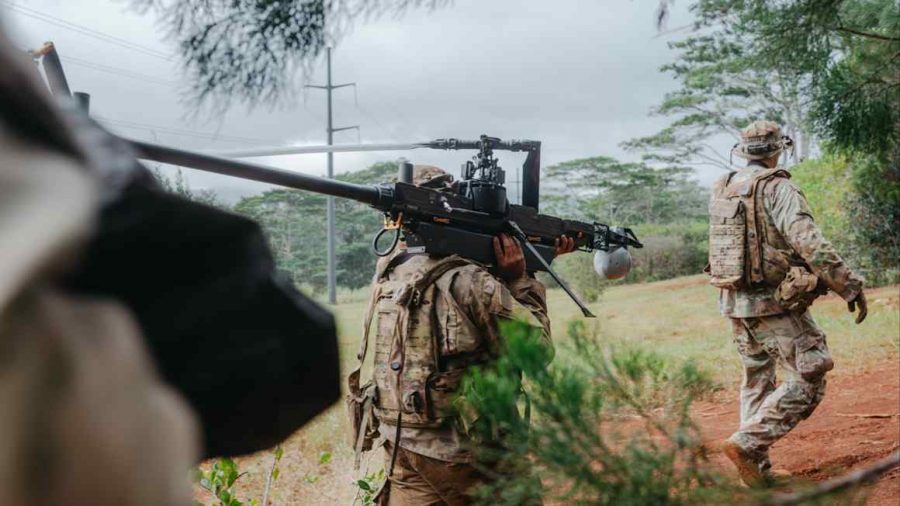
Anduril’s Call for Change in US Arms Export Controls
In a bold move that could reshape the landscape of defense technology and international military collaboration, Anduril Industries, a California-based defense tech start-up, is urging a comprehensive reevaluation of the United States’ arms export controls. The company’s CEO, Palmer Luckey, believes that loosening these regulations could facilitate the production of lower-cost weapons, thereby strengthening the military capabilities of the U.S. and its allies.
The Current State of US Arms Export Controls
Arms export controls in the U.S. are among the most stringent in the world, designed to prevent sensitive military technology from falling into the wrong hands. These regulations, however, have also been criticized for stifling innovation and complicating partnerships with allied nations. As global security concerns escalate, Luckey argues that a rethink is necessary to ensure that the U.S. maintains its competitive edge and supports its allies effectively.
Collaboration with Allies
Luckey envisions a collaborative approach where the U.S. can work closely with its allies to produce advanced weaponry at lower costs. By easing restrictions on arms exports, Anduril aims to foster a network of partnerships that can accelerate the development and deployment of innovative defense solutions. This strategy not only promises economic benefits but also enhances mutual defense capabilities among allied nations.
The Need for Lower-Cost Weapons
As military conflicts become increasingly complex, the demand for affordable and effective weaponry has never been greater. Traditional defense contractors often face high production costs, which can lead to delays in the delivery of essential military equipment. Anduril’s approach seeks to disrupt this cycle by leveraging technology and innovation to create cost-efficient solutions that do not compromise on effectiveness.
Potential Impact on National Security
The implications of a shift in US arms export controls are vast. By enabling faster production and distribution of military equipment, the U.S. could bolster its defense posture, particularly in regions where threats are imminent. Additionally, this could strengthen diplomatic ties with allies, as shared military resources and technologies foster a sense of unity and collective security.
Anduril’s Vision for the Future
Founded in 2017, Anduril Industries has quickly established itself as a pioneer in defense technology, developing cutting-edge systems such as autonomous drones and surveillance solutions. Luckey’s vision extends beyond just manufacturing weapons; he aims to revolutionize the defense industry by integrating advanced technologies like artificial intelligence and machine learning into military applications. This forward-thinking approach positions Anduril as a critical player in the future of defense.
The Road Ahead
As the discussion around arms export controls gains momentum, the defense industry is watching closely. Anduril’s call for reform could incite a broader dialogue about the balance between national security and technological innovation. Stakeholders from various sectors will need to engage in this conversation to ensure that any changes made serve both economic interests and the overarching goal of global security.
Conclusion
In an era defined by rapid technological advancement and evolving threats, the need for a strategic reassessment of US arms export controls is more pressing than ever. As Anduril Industries leads the charge for reform, the potential for collaborative production of lower-cost weapons could reshape not only the defense landscape but also the very fabric of international military alliances.