Bolivia Faces Unrest as Government Moves to Suppress Protests
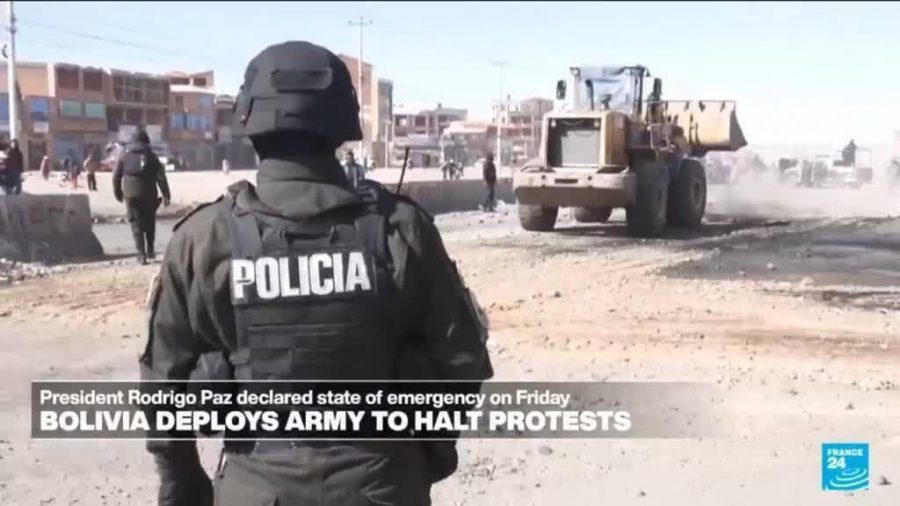
In a decisive move to restore order, Bolivia’s government has deployed military forces and heavy machinery to dismantle anti-government roadblocks. This aggressive action comes on the heels of President Rodrigo Paz declaring a state of emergency, a measure that significantly restricts citizens’ rights to protest and grants the government the authority to utilize the military to enforce compliance.
Background of the Protests
For over six weeks, various factions within Bolivia, including labor unions, Indigenous communities, and coca farmers, have engaged in widespread protests against a series of controversial economic reforms introduced by the Paz administration. These reforms, which many view as detrimental to their livelihoods, have sparked outrage and mobilized diverse groups across the nation.
State of Emergency Declared
On Monday, President Paz announced the state of emergency, citing the need to restore public order amidst escalating tensions. The declaration came after negotiations between the government and protest leaders failed to yield any resolution, leading to a dramatic increase in roadblocks and demonstrations across the country.
Military Involvement
The deployment of military forces marks a significant escalation in the government’s response to the unrest. Soldiers have been seen clearing roads and dismantling barricades, while bulldozers are being used to remove physical obstructions erected by protesters. This military intervention has drawn criticism from human rights organizations, which warn that such actions could lead to further violence.
Public Reaction
The public response to the government’s heavy-handed tactics has been mixed. While some citizens support the government’s efforts to restore order, many others are alarmed by the militarization of the state and the erosion of civil liberties. “We are fighting for our rights, and this is our way of being heard,” stated a leader of the Indigenous protestors, emphasizing the resolve of those involved in the demonstrations.
Continued Protests Expected
Despite the government’s crackdown, analysts suggest that protests will likely continue. The underlying issues fueling the unrest—economic inequality, lack of representation, and discontent with governmental policies—remain unresolved. As the military enforces the state of emergency, many fear that the situation could escalate further, leading to a cycle of violence.
International Attention
The situation in Bolivia has drawn the attention of international observers and human rights advocates. Calls for restraint have been issued, urging the government to engage in dialogue with protest leaders rather than resorting to military force. The unfolding events are being closely monitored by neighboring countries and global organizations, concerned about the implications for democracy and human rights in the region.
Conclusion
As Bolivia grapples with this unprecedented crisis, the path forward remains uncertain. The government’s actions will undoubtedly have lasting repercussions on its relationship with various social groups and could reshape the political landscape in the country for years to come. As protests continue, the resilience of the Bolivian people in the face of adversity will be put to the test.