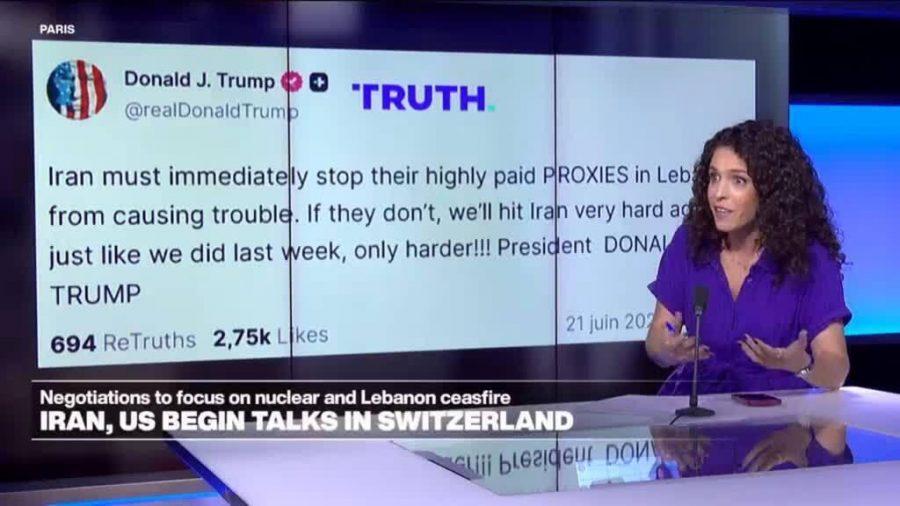
Trump’s Warning: A High-Stakes Tension with Iran
In a dramatic escalation of rhetoric, U.S. President Donald Trump issued a stark warning to Iran on Sunday, threatening military action if Tehran does not intervene to curtail the activities of Hezbollah, the Iran-backed militant group entrenched in Lebanon. This warning comes as peace negotiations between American and Iranian officials are set to commence in Switzerland, highlighting a complex interplay of diplomacy and military posturing in the region.
Context of the Conflict
The memorandum of understanding signed last Wednesday between the United States and Iran aimed to establish a cessation of hostilities across various fronts, particularly in Lebanon, where tensions have been mounting. However, the situation on the ground remains volatile. Israeli forces have continued their airstrikes in Lebanon, claiming that these actions are necessary due to projectiles fired by Hezbollah at Israeli troops stationed along the border.
The Role of Hezbollah
Hezbollah, known for its significant military capabilities and close ties to Iran, has long been a focal point of regional instability. The group has been involved in various conflicts across the Middle East, and its actions are often viewed through the lens of Tehran’s geopolitical ambitions. Trump’s latest remarks underscore the administration’s frustration with Iran’s support for such groups, which it accuses of exacerbating tensions and undermining peace efforts.
International Reactions
The ongoing fighting and threats of further military action have garnered international attention, with various countries calling for restraint. Analysts warn that any military strike against Iran could have catastrophic consequences, not only for U.S.-Iran relations but for the broader Middle Eastern landscape. As the situation develops, the global community watches closely, weighing the potential for diplomacy against the ever-present threat of escalation.
Prospects for Peace Talks
As the talks in Switzerland begin, the stakes could not be higher. Both sides face immense pressure to find common ground, with the potential for a lasting resolution to the conflict hanging in the balance. However, the dynamics of the negotiations are fraught with challenges, particularly given the recent military actions and escalating rhetoric.
- Military Action: Trump’s ultimatum raises concerns about potential military strikes against Iran.
- Hezbollah’s Role: The Iran-backed group’s actions in Lebanon are central to the U.S. administration’s frustrations.
- International Implications: A conflict involving Iran could destabilize the entire region.
- Future of Diplomacy: The outcome of peace talks may determine the trajectory of U.S.-Iran relations.
Conclusion
The ongoing situation in Lebanon and the broader U.S.-Iran relationship is a precarious balancing act of diplomacy, military readiness, and international scrutiny. As both sides prepare for negotiations, the world awaits to see whether peaceful resolutions can emerge from the shadows of conflict or if further hostilities will ensue. The coming days and weeks will be critical in shaping the future of the region and the geopolitical landscape at large.