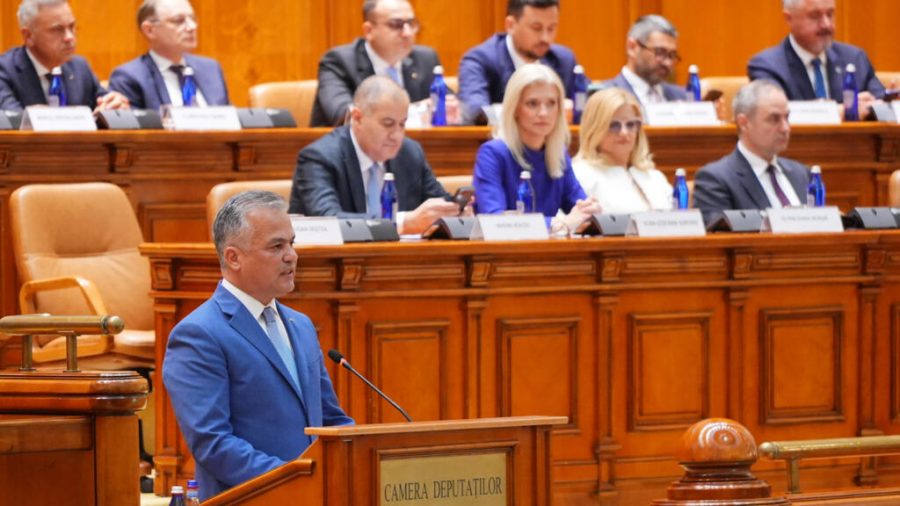
In a significant blow to Romania’s political landscape, the country’s parliament has decisively rejected the appointment of prime minister-designate Adrian Vestea on Monday. This development marks an extension of the ongoing political turmoil in the European Union and NATO member state, which shares a border with Ukraine and faces growing challenges amid a complex regional landscape.
The Turbulent Political Climate in Romania
Romania has been grappling with a turbulent political climate for several months, characterized by infighting among political factions and a lack of consensus on governance. The rejection of Vestea is not just a setback for him personally, but also signals deeper issues within the Romanian political system.
Adrian Vestea’s Nomination
Adrian Vestea, a member of the National Liberal Party (PNL), was nominated for the prime ministerial position following the resignation of his predecessor. His appointment was seen by some as a chance for stability; however, it quickly became apparent that political divisions would thwart his ascent.
Key Reasons for the Rejection
The parliamentary vote showcased significant opposition from various political factions, with critics arguing that Vestea’s policies did not adequately address the pressing issues facing the nation. Lawmakers expressed concerns over economic management, social policies, and the government’s ability to navigate the ongoing geopolitical tensions in the region.
- Economic Concerns: Many parliamentarians highlighted the need for a robust economic strategy to combat inflation and improve living standards.
- Social Policies: Opposition parties argued that Vestea’s proposed social reforms did not go far enough to support vulnerable populations.
- Geopolitical Context: Romania’s proximity to Ukraine has led to heightened security concerns, necessitating a government capable of responding effectively.
Potential Consequences of the Rejection
The defeat of Vestea’s nomination raises the specter of a snap election, particularly if the next candidate proposed by the ruling coalition also fails to garner sufficient support. Political analysts warn that ongoing instability could hinder Romania’s ability to respond to both domestic and international challenges.
A Call for Unity
In light of the recent developments, leaders from various political parties have called for a renewed commitment to collaboration, urging parliamentarians to prioritize the needs of the Romanian people over partisan interests. The urgency of the situation is underscored by Romania’s role within the EU and NATO, where stability and unity are paramount.
The Path Forward
As the political landscape continues to shift, all eyes will be on the next steps taken by the ruling coalition. Should the next prime ministerial nominee also face rejection, the likelihood of a snap election increases, potentially leading to further uncertainty.
In conclusion, Romania’s political future hangs in the balance as leaders navigate a challenging environment marked by division and discontent. The rejection of Adrian Vestea is a clear indication that the road ahead will require significant negotiation and compromise to restore stability in the government and ensure the interests of the Romanian populace are met.