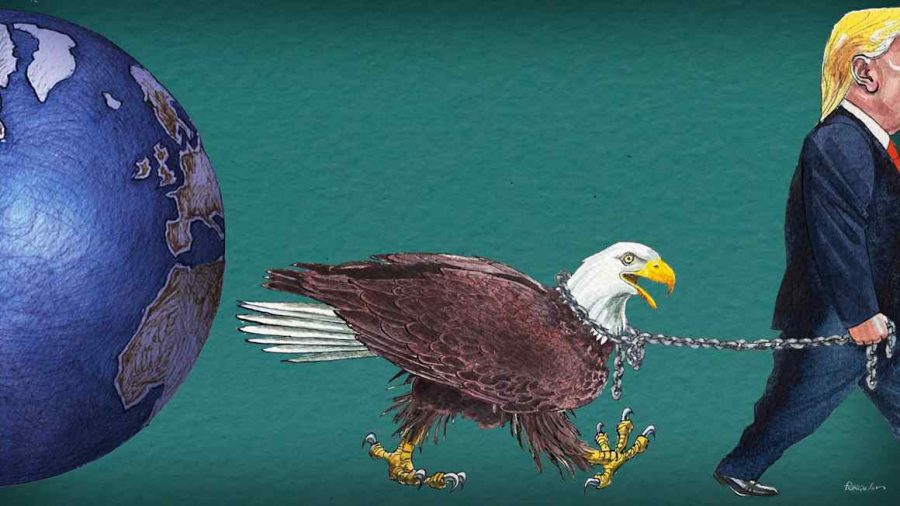
The Rise and Fall of US Hegemony
As America approaches its 250th birthday, the nation finds itself at a pivotal crossroads. The global order that the United States helped establish is now facing unprecedented challenges.
A Historical Perspective
The United States emerged as a dominant force in the aftermath of World War II, championing democracy and capitalism while promoting a rules-based international order. This hegemony facilitated unprecedented global economic growth and stability, drawing nations into a system that many viewed as beneficial. However, the foundations of this dominance are now being questioned.
Current Global Challenges
Today, the landscape of international relations is marked by rising powers, economic shifts, and internal strife that challenge the long-held principles of US leadership. The rise of China as a formidable economic and military power has led to a reevaluation of alliances and strategies.
- Geopolitical Tensions: The South China Sea and Taiwan are flashpoints that showcase the increasing assertiveness of China, leading to a recalibration of US foreign policy.
- Economic Shifts: The COVID-19 pandemic has accelerated economic changes, with many nations seeking alternatives to a US-centric model.
- Internal Divisions: Political polarization within the United States undermines its ability to project a unified foreign policy.
The Erosion of Alliances
Long-standing alliances, such as NATO, are feeling the strain as member countries grapple with their own national interests. The perception that the US is retreating from its global commitments has raised concerns about the future of collective security.
The Role of Technology
Technological advancements have also reshaped the global playing field. Cybersecurity threats and information warfare are new battlegrounds where the US must defend its interests against adversaries who exploit these vulnerabilities.
Public Perception and Global Attitudes
Public sentiment towards the US varies significantly across the globe. While some nations continue to view America as a beacon of hope, others express skepticism, questioning its ability to lead effectively. This ambivalence poses a challenge for American diplomacy.
Looking Ahead
As the United States approaches its 250th anniversary, the question remains: can it adapt to a changing world? The future of American hegemony depends on its ability to innovate, engage with allies, and address internal issues that threaten its global standing.
Conclusion
The rise and fall of US hegemony is a complex narrative that reflects broader trends in global politics. As America navigates this crisis, it must grapple with its legacy and consider how to redefine its role in an increasingly multipolar world.