Iran’s Revolutionary Guard Targets Gulf States Amid Rising Tensions
In a dramatic escalation of hostilities in the Middle East, Iran’s Revolutionary Guard launched targeted attacks on Bahrain and Kuwait on Sunday. These strikes are in direct response to recent US airstrikes that hit ten Iranian sites, intensifying fears of a broader conflict in the region.
US Airstrikes Prompt Iranian Retaliation
The US military’s decision to strike Iranian positions has drawn sharp condemnation from Tehran. In a statement following the attacks, Iranian officials warned of a “complete halt” to ongoing negotiations aimed at de-escalating the situation. The Iranian leadership views these US actions as an aggressive provocation that undermines diplomatic efforts and threatens regional stability.
Threats to Regional Stability
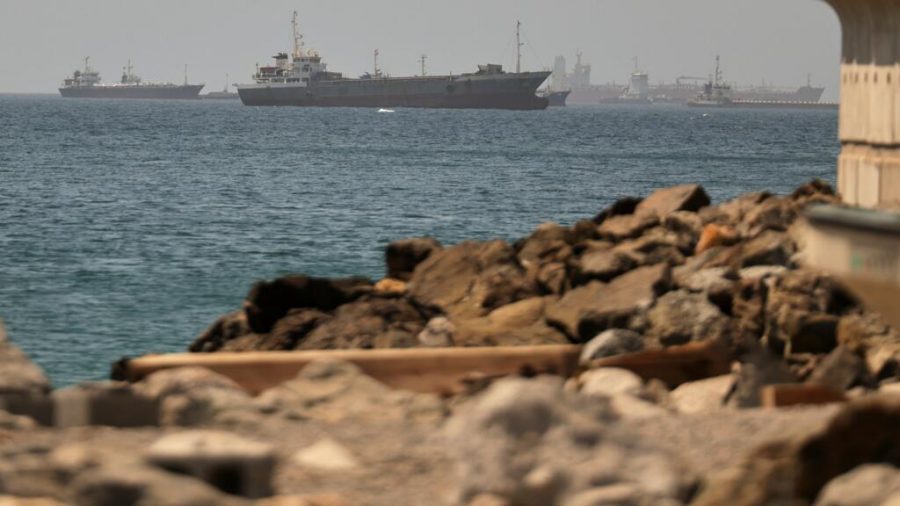
The recent military actions come at a time when the fragile truce in the region is being tested. Efforts to reopen the strategically vital Strait of Hormuz without Iran’s direct oversight have sparked new tensions. This waterway is crucial for global oil shipments, and any disruption could have far-reaching consequences for the global economy.
Regional Implications of Iran’s Attacks
In light of the Iranian strikes, Bahrain and Kuwait have heightened their military readiness, fearing that the conflict could spill over into their territories. Both nations are key allies of the United States and have historically been on alert for Iranian aggression. The recent developments have raised alarms among regional analysts, who warn that a miscalculation could lead to a wider military engagement.
Iran’s Strategic Calculations
Tehran’s decision to target Gulf states signifies a shift in its military strategy. By directly threatening neighboring countries, Iran aims to send a message to the US and its allies that it will not tolerate what it perceives as encroachments on its sovereignty. This aggressive posture could complicate diplomatic efforts and lead to further military escalation in the coming weeks.
International Reactions
The international community has responded with concern over the escalating violence. Several countries have called for restraint on both sides, urging a return to negotiations. The UN Security Council is expected to discuss the situation in an emergency session, as the ramifications of these attacks could destabilize not only the Gulf region but also have global implications for energy security.
Conclusion: A Tenuous Situation
The situation in the Middle East remains precarious as Iran continues to flex its military muscle in response to US actions. The potential for further conflict looms large, with both sides seemingly unwilling to back down. As the world watches closely, the hope for a diplomatic resolution hangs by a thread amidst the rising tide of military confrontations.
- Iran’s Revolutionary Guard launched attacks on Bahrain and Kuwait.
- The strikes were in retaliation for US airstrikes on Iranian sites.
- Tehran threatened to halt negotiations if US attacks continue.
- Efforts to reopen the Strait of Hormuz are escalating tensions.
- Regional allies are on high alert amid fears of further conflict.