Serbia’s Political Landscape Shifts as President Aleksandar Vučić Announces Resignation
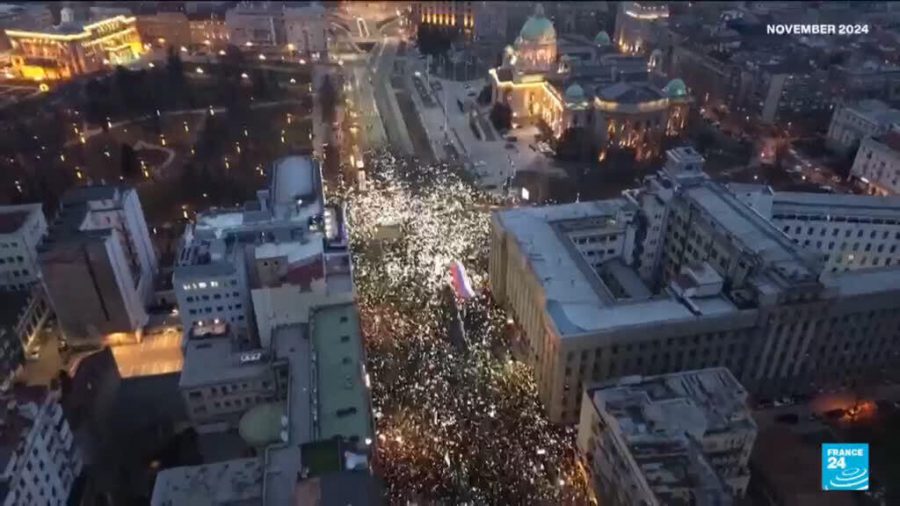
In a significant turn of events, Serbian President Aleksandar Vučić has declared his intention to resign in the coming weeks, effectively setting the stage for early elections in the Balkan nation. This announcement comes amid a backdrop of escalating political tensions and widespread protests, particularly from university students advocating for change in the country’s leadership.
Background of Political Tensions
Serbia has experienced over a year of political unrest, with citizens increasingly dissatisfied with the current government’s policies and direction. Protests, predominantly led by youths, have called for greater transparency, accountability, and democratic reforms. The movements gained traction as discontent with Vučić’s administration grew, leading to a surge in public demonstrations.
The Announcement and Its Implications
Vučić’s resignation has sent shockwaves through the political sphere, raising questions about the future of governance in Serbia. Speculation is rife that the populist leader may seek to transition into the role of Prime Minister, a position that wields considerable influence over the country’s legislative agenda. Observers are closely watching this development, as it could significantly reshape Serbia’s political landscape.
Public Reaction and Protests
The announcement has been met with mixed reactions from the public. While some view it as a step towards much-needed political reform, others are wary of Vučić’s potential maneuvering to consolidate power. University students, who have been at the forefront of the protests, have expressed cautious optimism, urging for a genuine democratic process and not just a change in figureheads.
Potential Consequences for Serbia
As the country prepares for what could be a pivotal election, analysts suggest that Vučić’s resignation may ignite a new wave of political engagement among citizens. The landscape is uncertain, with various opposition parties vying for influence. The political dynamics in Serbia could shift dramatically, depending on how the upcoming elections are conducted and the extent to which the electorate engages with the process.
Looking Ahead: The Role of Opposition Parties
With Vučić’s resignation, opposition parties are gearing up to capitalize on the moment. Many have been revitalized by the protests, and leaders are calling for unity among their ranks to present a formidable challenge to the ruling party. Key issues such as corruption, economic development, and youth engagement are expected to dominate the electoral discourse.
International Implications
Serbia’s political stability is of significant interest to international observers, particularly in the context of the Balkans’ complex geopolitical landscape. The outcome of the upcoming elections could have broader implications for regional stability, EU integration efforts, and diplomatic relations with neighboring countries.
Conclusion
As Serbia stands on the brink of potentially transformative elections, the resignation of President Aleksandar Vučić marks a critical juncture in the nation’s journey. With the public’s eyes turned towards the future, the upcoming weeks will be crucial in determining whether this moment leads to genuine democratic progress or merely a reshuffling of political power.