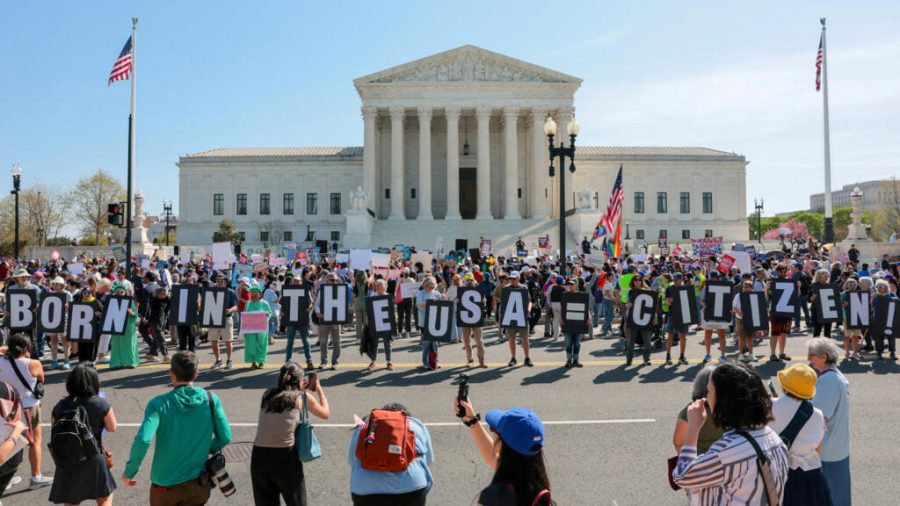
Supreme Court’s Landmark Decision on Birthright Citizenship
In a significant ruling that resonates with the core principles of American democracy, the US Supreme Court has firmly upheld the concept of birthright citizenship. This decision comes as a direct response to an executive order issued by former President Donald Trump, which sought to redefine the citizenship status of children born to parents who are in the United States without legal documentation.
The Background of the Case
The issue of birthright citizenship has been a contentious topic in American politics, particularly in the wake of increasing debates over immigration policy. The 14th Amendment of the US Constitution, ratified in 1868, clearly states that “all persons born or naturalized in the United States, and subject to the jurisdiction thereof, are citizens of the United States.” This foundational principle has historically granted citizenship to anyone born on US soil, irrespective of their parents’ immigration status.
Trump’s executive order, issued in 2019, aimed to challenge and overturn this long-standing interpretation of the 14th Amendment. The order proposed that children born to parents who are temporary visitors or undocumented immigrants would not automatically receive American citizenship, a move that sparked widespread legal challenges and public outcry.
The Supreme Court’s Decision
On Tuesday, the Supreme Court, in a decisive ruling, rejected Trump’s attempt to restrict birthright citizenship. The justices emphasized that the Constitution’s language is clear and unambiguous, reinforcing the principle that citizenship cannot be arbitrarily denied based on the immigration status of parents. Legal experts view this ruling as a critical affirmation of the rights guaranteed under the Constitution and a strong rebuke of policies aimed at curtailing the rights of the vulnerable.
- Implications for Immigrant Families: This ruling is expected to have far-reaching implications for immigrant families across the United States. Parents who are undocumented can now rest assured that their children, regardless of their immigration status, are entitled to the same rights and protections as any other American citizen.
- A Broader Legal Context: This decision also sets a precedent for future cases concerning immigration and citizenship rights, reinforcing the judiciary’s role in upholding constitutional protections against executive overreach.
- Public Reaction: Advocacy groups and immigrant rights organizations have lauded the Supreme Court’s decision, viewing it as a victory for justice and equity. Many are now calling for comprehensive immigration reform to further protect the rights of all individuals living in the United States.
Looking Ahead
The Supreme Court’s ruling is not just a legal victory; it is a reaffirmation of the American ethos that values inclusivity and equality. As the nation continues to grapple with complex immigration issues, this decision serves as a reminder of the foundational beliefs that define the United States. The battle over immigration policy is far from over, but for now, the court has made it clear that birthright citizenship remains a fundamental right.
As discussions about immigration reform and policy continue, this ruling will undoubtedly shape the narrative moving forward. It is a pivotal moment for those advocating for the rights of immigrants, underscoring the importance of judicial review in the face of executive power.