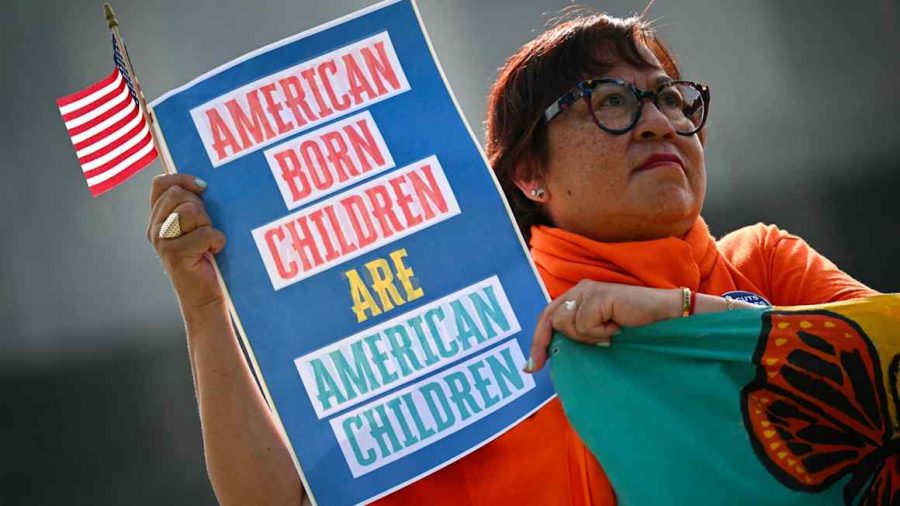
Supreme Court Rejects Trump’s Efforts to End Birthright Citizenship
In a landmark decision that reverberates across the political landscape, the United States Supreme Court has officially declined to hear former President Donald Trump’s appeal to terminate birthright citizenship. This ruling marks a significant setback for Trump’s immigration policies, which have long sought to reshape the legal framework governing citizenship in the United States.
Background on Birthright Citizenship
Birthright citizenship, established by the 14th Amendment of the U.S. Constitution, has been a foundational principle in American law since its ratification in 1868. The clause guarantees that anyone born on U.S. soil is automatically granted citizenship, a provision that has been a source of debate in recent years, particularly amidst rising anti-immigration sentiments.
Trump’s Campaign Against Birthright Citizenship
During his presidency, Trump frequently targeted birthright citizenship, arguing that it incentivized illegal immigration and was being exploited by those seeking to gain a legal foothold in the country. His administration made numerous attempts to challenge the constitutionality of the 14th Amendment, claiming that the law was outdated and needed to be re-evaluated in the context of modern immigration issues.
The Supreme Court’s Decision
The Supreme Court’s decision to dismiss Trump’s appeal is viewed as a reaffirmation of the longstanding legal interpretation of the 14th Amendment. Legal experts have noted that the Court’s refusal to entertain the case underscores a broader commitment to maintaining established constitutional principles, despite ongoing political pressure to alter them.
Implications for Immigration Policy
This ruling has significant implications for future immigration policy and the broader discourse surrounding citizenship in America. With the Supreme Court’s decision to uphold birthright citizenship, Trump’s vision of a reformed immigration system faces additional hurdles. Analysts suggest that this ruling may embolden advocates for immigrant rights and challenge lawmakers who wish to pursue restrictive immigration measures.
Responses to the Ruling
Reactions to the Supreme Court’s decision have been mixed, with advocacy groups celebrating the outcome as a victory for civil rights and opponents viewing it as a missed opportunity for reform. Organizations like the American Civil Liberties Union (ACLU) have lauded the ruling, asserting that it protects the rights of all individuals born in the U.S.
- ACLU Statement: “This decision safeguards a fundamental principle of American democracy and ensures that all children, regardless of their parents’ immigration status, are treated equally under the law.”
- Opposition Remarks: Critics argue that the ruling ignores pressing concerns about illegal immigration and the potential for abuse of citizenship laws.
The Path Forward
As the nation grapples with its immigration policies, the Supreme Court’s ruling serves as a reminder of the complexities surrounding citizenship and the ongoing debates that will shape the future of immigration in the United States. The decision not only impacts current legislation but also sets a precedent for how similar cases may be handled in the future.
Conclusion
In rejecting Trump’s bid to end birthright citizenship, the Supreme Court has sent a clear message: the Constitution still holds strong in the face of political challenges. This ruling will likely resonate in the halls of Congress as lawmakers continue to navigate the contentious waters of immigration reform.