Russia Struggles to Jam Starlink in Ukraine: A High-Tech Battle
In the ongoing conflict in Ukraine, the battle for information and communication supremacy has taken a dramatic turn as Russian forces face significant challenges in their attempts to disrupt Starlink, the satellite internet network that has become a lifeline for Ukrainian troops and civilians alike.
The Importance of Starlink in Ukraine
Starlink, operated by Elon Musk’s SpaceX, has provided crucial high-speed internet access across Ukraine, especially in areas heavily affected by the war. This satellite network has proven indispensable for military operations, enabling real-time communication, coordination, and intelligence sharing among Ukrainian forces. As conventional communication infrastructures have been damaged or destroyed, Starlink has emerged as a vital tool not only for military purposes but also for civilians seeking reliable internet access.
Russian Efforts to Disrupt Communications
In response to Starlink’s success, Russian military forces have deployed various electronic warfare systems aimed at jamming satellite communications. Reports have surfaced of Ukrainian forces successfully targeting and destroying these jamming systems, indicating a significant shift in the technological landscape of the conflict.
Recent Developments
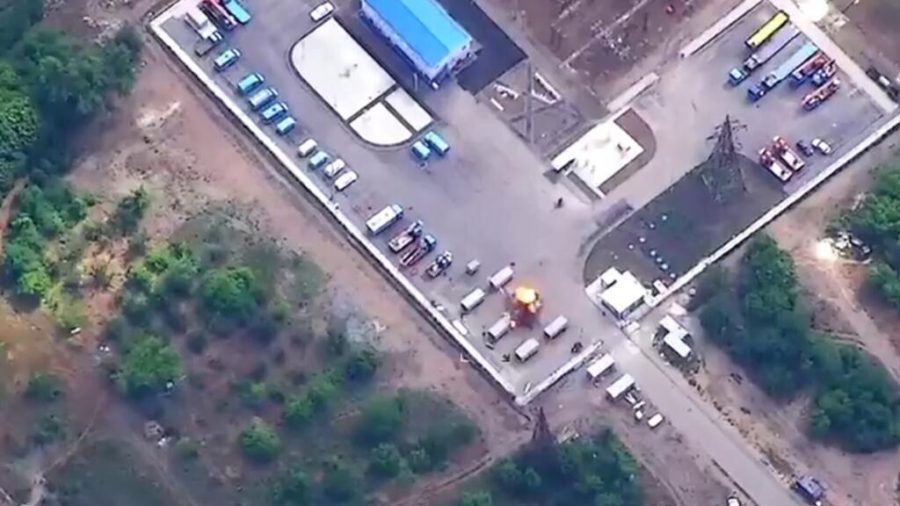
Recent footage has emerged showing Ukrainian military units engaged in operations against Russian jamming systems. These encounters highlight both the strategic importance of Starlink and the lengths to which Russia is willing to go to disrupt Ukraine’s communication capabilities. The footage depicts precise strikes that resulted in the destruction of a Russian jamming installation, showcasing the effectiveness of Ukrainian forces in countering the electronic warfare tactics employed by their adversaries.
The Challenges of Jamming Starlink
Starlink’s design inherently makes it resistant to jamming attempts. The system utilizes a large constellation of satellites in low Earth orbit, which allows for multiple communication pathways. This redundancy means that even if one signal is jammed, others can still provide connectivity. Additionally, the advanced technology behind Starlink includes sophisticated encryption and frequency-hopping capabilities, further complicating jamming efforts.
Implications for the Conflict
The struggle for control over reliable communication channels underscores a broader trend in modern warfare, where information dominance is as crucial as physical territory. As Ukraine continues to leverage the advantages provided by Starlink, Russia’s failure to effectively disrupt this network may have significant implications for the course of the conflict. The ability to maintain uninterrupted communication not only boosts morale among troops but also enhances operational effectiveness on the battlefield.
International Support and Future Developments
The international community has closely monitored the use of Starlink in Ukraine, with many countries recognizing its strategic importance. As the war progresses, the ongoing support for Ukraine’s access to this satellite network remains a priority for allies, who understand that technological superiority can often determine the outcome of engagements.
As Russia continues to adapt its tactics in an attempt to counter the advantages provided by Starlink, the conflict will likely see further developments in electronic warfare and countermeasures. The battle for information supremacy is far from over, and both sides are expected to invest heavily in new technologies and strategies.
Conclusion
The ongoing challenges faced by Russia in jamming Starlink highlight the evolving nature of warfare in the 21st century. As military operations become increasingly reliant on technology, the ability to maintain secure and reliable communication channels will be critical for both sides in this protracted conflict. The outcome of this high-tech battle could ultimately influence the direction of the war in Ukraine.