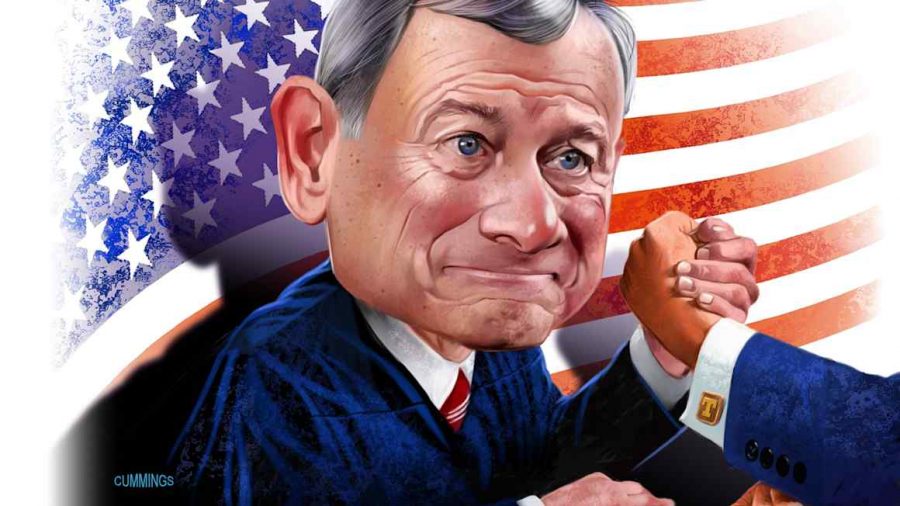
John Roberts: The Chief Justice Navigating Trump’s Legacy and Presidential Power
In an era marked by political polarization, Chief Justice John Roberts has emerged as a pivotal figure in the United States Supreme Court, balancing the complexities of a divided nation while redefining the scope of presidential authority. Under his stewardship, the Court has not only taken a stand against former President Donald Trump’s more controversial directives but has also broadened the boundaries of executive power in significant ways.
The Judicial Landscape Under Roberts
Since his appointment in 2005, Roberts has often been viewed as a stabilizing force on the Supreme Court. His approach has been characterized by a cautious pragmatism, leading him to navigate contentious issues with a focus on institutional integrity rather than ideological extremes. This strategy has proven crucial as the Court has faced a barrage of high-profile cases that challenge the very foundations of American law and governance.
Defying Trump: A Stand on Presidential Power
One of the most notable aspects of Roberts’ tenure has been his willingness to push back against the Trump administration. In several key rulings, the Court has rejected attempts by the former president to expand executive power beyond traditional limits. For instance, in cases involving immigration policy and the census, Roberts sided with a more moderate interpretation of the law, signaling a commitment to established legal norms over partisan agendas.
These decisions have not only defied Trump’s efforts to reshape American governance but have also reinforced the Court’s role as a check on presidential power. By doing so, Roberts has positioned the Supreme Court as an arbiter of constitutional limits, thereby upholding the principles of democracy amid a turbulent political landscape.
Expanding Presidential Authority: A Paradox?
While Roberts has made headlines for his opposition to certain Trump policies, he has also overseen rulings that have expanded the scope of presidential power in other respects. For example, the Court has upheld executive actions that allow for increased surveillance and restrict immigration, reflecting a complex relationship with the powers typically afforded to the presidency.
This duality raises questions about the trajectory of the Court under Roberts. Are his rulings indicative of a broader trend toward consolidating presidential power, or are they a necessary response to the unique challenges posed by contemporary governance?
Roberts’ Legacy: A Long Game
As Chief Justice, John Roberts appears to be playing a long game. His decisions often exhibit a strategic foresight, recognizing that the implications of today’s rulings will resonate far into the future. By cautiously navigating contentious issues and balancing the scales of justice, Roberts is not only shaping the current judicial landscape but also laying the groundwork for the future of the Supreme Court.
Looking Ahead
With the nation at a crossroads and the political climate as charged as ever, the role of the Supreme Court will only grow in significance. As Chief Justice, Roberts faces the challenge of maintaining the Court’s legitimacy while addressing the evolving dynamics of presidential power and public expectation.
In this context, Roberts stands as a key figure, embodying the tension between tradition and innovation in American law. His leadership will undoubtedly influence how the Court addresses the complex issues of our time, ensuring that its role as a guardian of democracy remains intact.