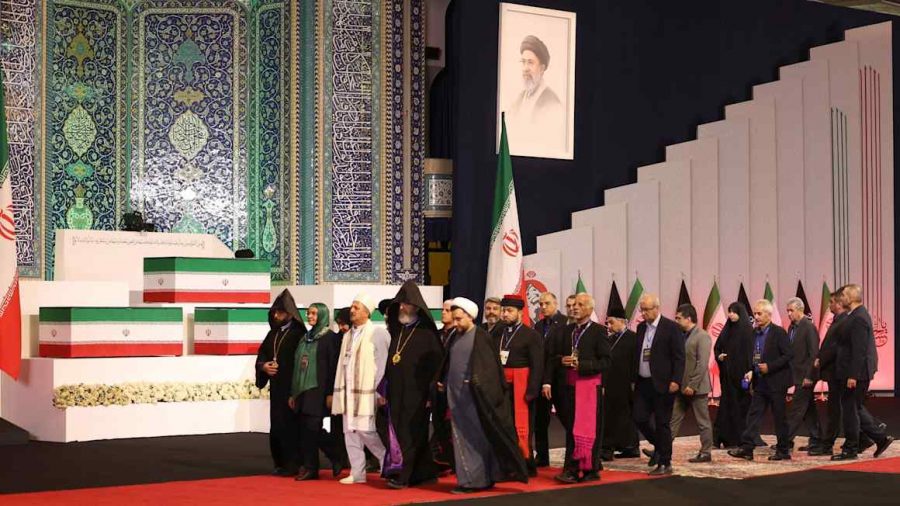
Iran Enters Mourning Period for Khamenei Under Heightened Security Measures
The Islamic Republic of Iran has officially entered a period of mourning for its slain Supreme Leader, Ayatollah Ali Khamenei, who was assassinated earlier this week. As dignitaries from various parts of the country and neighbouring states gather to pay their respects, the atmosphere is marked by both grief and a palpable sense of tension, prompting authorities to implement strict security protocols across the nation.
National Mourning Declared
In a statement released by the government, a national mourning period was declared, with flags at half-mast and public ceremonies planned throughout the country. Khamenei, who had led Iran for over three decades, was a polarizing figure, revered by many as a stalwart defender of the Islamic Republic while also facing substantial criticism both domestically and internationally. His sudden death has left a significant power vacuum, raising concerns about the future of Iran’s leadership and political stability.
Security Measures Intensified
In light of Khamenei’s assassination, security measures have been intensified across Iran. Major cities, including Tehran, have seen an increased military presence, with checkpoints and patrols established to deter any potential unrest. The government is also monitoring social media platforms to preemptively quell any dissent that may arise in the wake of Khamenei’s death.
Dignitaries and Leaders Pay Their Respects
A significant number of dignitaries, both from within Iran and neighbouring countries, have begun to arrive in Tehran to pay their respects. The government has arranged a series of memorial services to accommodate the influx of visitors, with some leaders expressing their condolences publicly.
- Among the notable attendees are:
- Officials from Iraq, Syria, and Lebanon, who have historically aligned with Iran’s political agenda.
- Regional leaders who view Khamenei’s leadership as integral to their own political strategies.
The memorial services are expected to draw large crowds, as Khamenei’s supporters gather to honor his legacy. However, the government has warned that any form of protest or dissent during these gatherings will not be tolerated.
The Future of Iran’s Leadership
As Iran mourns the loss of its Supreme Leader, questions loom over who will succeed Khamenei and how this transition will impact both domestic and foreign policy. Analysts suggest that the new leadership will face immediate challenges, including managing the economy, addressing public discontent, and maintaining Iran’s influence in the region.
There are speculations about potential candidates for the Supreme Leader position, with names being floated by political insiders and analysts. However, the selection process is expected to be complex and could lead to significant power struggles within the ruling elite.
International Reactions
The international community has reacted to Khamenei’s assassination with a mix of caution and intrigue. Some countries have expressed their condolences, while others have taken the opportunity to critique Iran’s political system. The United States, in particular, has been vocal in its stance, suggesting that this could be a pivotal moment in Iran’s history.
As Iran navigates this period of mourning and uncertainty, the world watches closely, anticipating how the events will unfold in the coming days and weeks. The implications of Khamenei’s death extend beyond Iran’s borders, affecting geopolitical dynamics and regional stability.