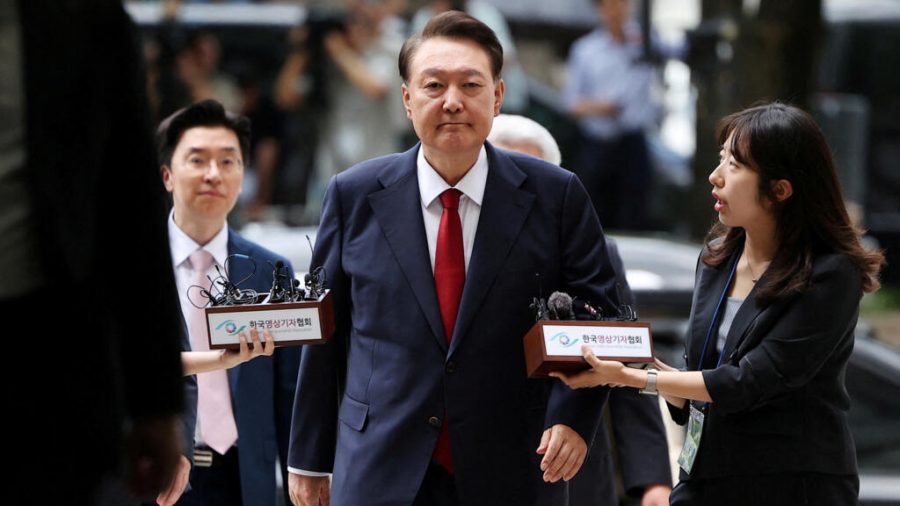
South Korea’s Supreme Court Upholds Sentence for Former President Yoon Suk Yeol
In a landmark legal decision, South Korea’s Supreme Court has upheld a seven-year prison sentence for former president Yoon Suk Yeol, who faced charges of obstruction of justice and other crimes linked to his controversial declaration of martial law in 2024. This ruling marks a significant moment in South Korea’s political landscape and raises questions about accountability among its leaders.
The Charges Against Yoon Suk Yeol
The charges against Yoon stem from a series of events that unfolded during a time of national turmoil in 2024. His administration’s attempt to impose martial law was met with widespread backlash, leading to accusations of abuse of power and disregard for democratic principles. Critics argued that the declaration was not only unnecessary but also a blatant attempt to consolidate power amidst mounting public dissent.
Yoon’s Defense and Claims of Public Interest
Despite the overwhelming evidence presented against him, Yoon Suk Yeol has maintained that his actions were driven by a genuine concern for the public interest. He insisted that the martial law declaration was a necessary measure to restore order during a period of escalating unrest. This defense, however, has not swayed the court, which found that Yoon’s actions constituted a serious breach of his presidential duties.
Reactions to the Supreme Court’s Decision
The Supreme Court’s ruling has sparked a mixed response across South Korea. Supporters of Yoon have expressed outrage, claiming that the judicial system has been weaponized against political opponents. On the other hand, many citizens and political analysts view the decision as a critical step toward ensuring that no leader is above the law.
- Public Sentiment: Many South Koreans believe that Yoon’s conviction is a sign of progress in the country’s democratic framework.
- Political Ramifications: The ruling could have significant implications for Yoon’s political party and its future elections.
- Legal Precedent: This case sets a precedent for how allegations of misconduct by high-ranking officials are handled in South Korea.
The Aftermath of the Ruling
As Yoon Suk Yeol prepares to serve his sentence, the South Korean political scene is left in upheaval. His party, the People Power Party, faces challenges in maintaining its influence amid growing public discontent. The ruling has also reopened discussions about the need for reforms in how former leaders are held accountable for their actions while in office.
Looking Ahead
As South Korea moves forward, the implications of this ruling will likely resonate for years to come. The case serves as a reminder of the delicate balance between power and accountability in a democracy, as well as the ongoing struggle to uphold the rule of law in the face of political adversity. The future of South Korea’s leadership will depend significantly on how it navigates the legacy of Yoon Suk Yeol and the judicial system’s role in shaping political conduct.