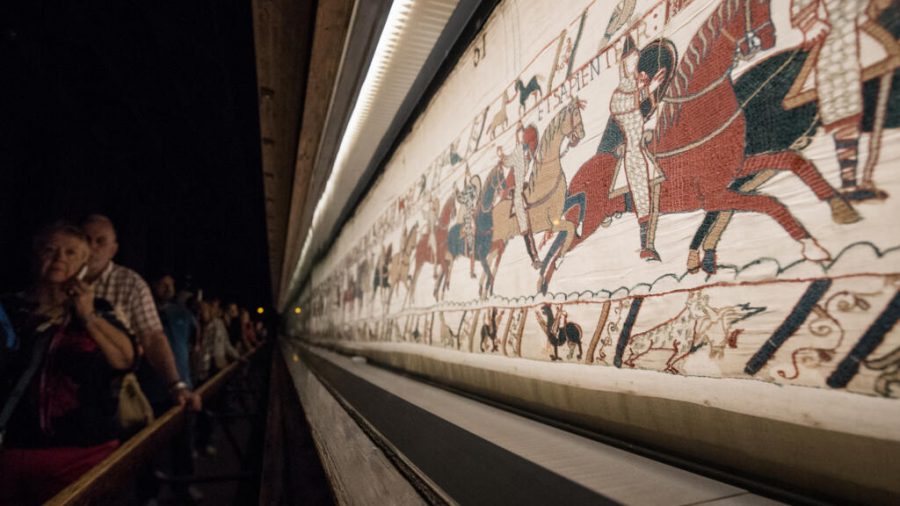
The Bayeux Tapestry, an extraordinary piece of 11th-century embroidery that narrates the story of the Norman conquest of England, has embarked on a historic journey across the English Channel. Nearly 1,000 years after it was first created, this fragile masterpiece has arrived in London on an unprecedented loan to the British Museum, stirring both excitement and apprehension among historians, art lovers, and cultural custodians.
The Significance of the Bayeux Tapestry
Woven in the years following the Norman conquest of 1066, the Bayeux Tapestry is more than just a remarkable work of art; it is a visual chronicle of a pivotal moment in European history. Spanning nearly 70 meters long, the tapestry is adorned with intricate scenes depicting the events leading up to the Battle of Hastings, showcasing not just the battle itself but also the political machinations and cultural exchanges of the time.
Delight in the Arts Community
The tapestry’s arrival in London has been met with enthusiasm from art historians and the public alike. “This is a unique opportunity to witness one of the greatest treasures of medieval Europe in our own city,” said Dr. Jane Thompson, a curator at the British Museum. “The Bayeux Tapestry offers invaluable insights into the past, and its exhibition here will spark conversations about our shared history and heritage.”
Concerns Over Cultural Heritage
However, the tapestry’s journey is not without its controversies. Critics express concern over the implications of moving such a delicate artifact. The tapestry is made from wool and linen, and its intricate stitches are vulnerable to environmental changes and handling. “Transporting the tapestry poses risks that cannot be ignored,” warned Professor Mark Reed, an art conservationist. “Even with the most advanced packing and handling techniques, there is always a chance of damage during transit.”
Diplomatic Implications
The loan of the Bayeux Tapestry also raises questions about cultural diplomacy between France and the United Kingdom. The tapestry has long been a symbol of French heritage, and its temporary relocation to London has reignited discussions about ownership and cultural exchange. “This loan is a gesture of goodwill, but it also underscores the ongoing debate about the rightful home of cultural artifacts,” said Dr. Emily Verne, a cultural heritage expert.
The Journey Across the Channel
The logistics of transporting the tapestry were meticulously planned. It was carefully rolled and secured in a climate-controlled container to ensure its protection during the journey. The operation involved a team of art conservators and security personnel, highlighting the complexities involved in moving priceless cultural treasures.
Public Engagement and Education
Upon its arrival, the Bayeux Tapestry will be displayed alongside a series of educational programs designed to engage the public. The British Museum plans to host lectures, workshops, and interactive exhibits that will allow visitors to explore the tapestry’s history and significance. “We want to create a dialogue about the tapestry’s relevance today,” said Dr. Thompson. “It’s not just a relic of the past; it speaks to issues of power, identity, and cultural exchange that resonate in our contemporary world.”
Looking Ahead
As the tapestry prepares for its grand unveiling, the excitement surrounding its presence in London continues to grow. While the risks associated with its journey cannot be overlooked, the potential for increased appreciation and understanding of cultural heritage is immense. The Bayeux Tapestry promises to be more than just an exhibition; it is a bridge connecting past and present, inviting us to reflect on our shared history and what it means for our futures.