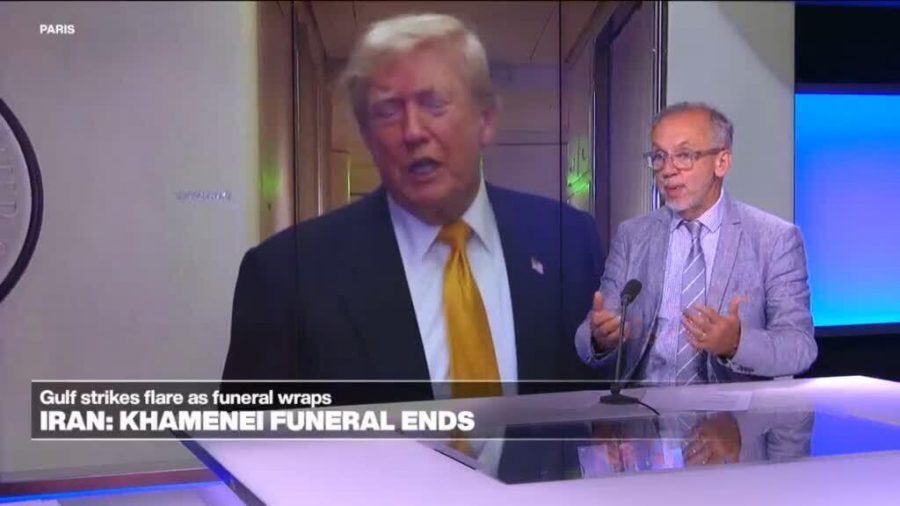
Iran Intensifies Regional Pressure Amid Renewed US Military Actions
In a dramatic escalation of tensions, Iran has ramped up its regional pressure following a series of renewed US airstrikes coinciding with the funeral ceremonies for the late Ayatollah Ali Khamenei. The military actions by the United States have prompted Iran to respond by targeting its allies and issuing threats towards American military bases throughout the region.
Context of the Renewed Strikes
The recent US strikes have reignited fears of an all-out conflict in a region already fraught with instability. These military actions are perceived by Tehran as a direct challenge to its influence and sovereignty. The timing of the strikes, during a moment of national mourning for Iran, has further inflamed public sentiment against the United States.
Iran’s Strategic Response
In reaction to the US strikes, Iranian officials have made it clear that they will not sit idly by. According to reports from FRANCE 24’s Philip Turle, Iran has begun to bolster its military readiness by targeting US allies in the region, including various factions in Iraq and Syria. These actions are seen as a strategic maneuver to exert pressure on the United States and its partners.
- Targeting Allies: Iran’s proxies in Iraq and Syria have been instructed to prepare for potential retaliatory strikes against US interests.
- Threats to Bases: Iranian military leaders have issued warnings about the vulnerability of American bases across the Middle East, suggesting that they could become targets if the strikes continue.
Negotiating Table Dynamics
Despite former President Donald Trump’s declaration that the ceasefire is effectively over, analysts suggest that both Washington and Tehran are still engaged in backchannel negotiations. The stakes have never been higher, especially with the upcoming US midterm elections, which could shift the political landscape significantly.
Neither side appears willing to escalate the conflict to a level that could lead to widespread warfare. The economic and political consequences of such a conflict could be devastating, not just for Iran and the US, but for the entire region.
Implications for Regional Stability
The situation remains fluid as Iran continues to assert its influence while simultaneously preparing for a possible diplomatic resolution. Regional allies of both the US and Iran are closely monitoring developments, recognizing that the stability of the Middle East hangs in the balance.
As tensions persist, the international community is calling for restraint. The prospect of renewed negotiations could provide a glimmer of hope for de-escalation, but the road ahead is fraught with uncertainty.
Conclusion
As Iran steps up its military posturing in response to US actions, the need for diplomatic engagement becomes more pressing. With both sides wary of the consequences of a prolonged conflict, the coming weeks will be crucial in determining the future of US-Iran relations and the broader stability of the Middle East.