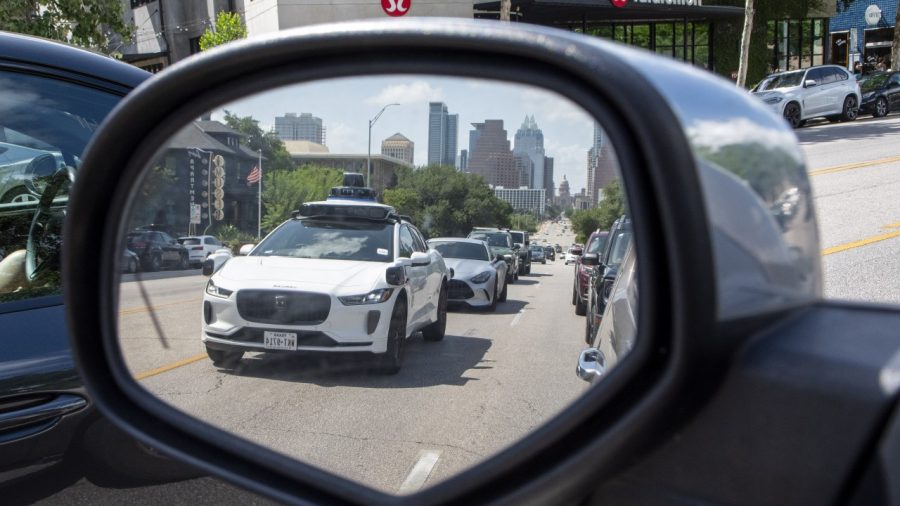
A Big Headache for Police: Getting Driverless Cars to Obey Traffic Laws
As the era of autonomous vehicles dawns, law enforcement agencies across the United States find themselves grappling with a novel challenge: ensuring that driverless cars adhere to traffic regulations. With the emergence of fleets of autonomous taxis roaming city streets, police officers are being trained to effectively manage, direct, and when necessary, penalize these high-tech vehicles.
The Rise of Autonomous Vehicles
The rapid advancement of technology has led to a surge in the deployment of autonomous vehicles. Companies like Waymo, Tesla, and Uber are at the forefront of this revolution, rolling out their driverless taxi services in urban areas. These vehicles promise to enhance road safety and reduce traffic congestion, but they also present unique challenges for law enforcement.
Understanding the Challenge
Unlike human drivers, autonomous vehicles rely on sophisticated algorithms and sensors to navigate roads. This raises questions about accountability when traffic laws are broken. Who is responsible when a driverless car runs a red light or is involved in an accident? As these vehicles become more prevalent, police officers must adapt their approach to enforcing laws that were originally designed for human drivers.
Training Law Enforcement
To address these challenges, law enforcement agencies are investing time and resources into training programs focused on autonomous vehicles. Officers are learning how to interact with driverless cars, including how to direct them in traffic and communicate effectively with their operators, when applicable.
- Understanding Vehicle Behavior: Officers are educated on how autonomous systems work, including their limitations and decision-making processes.
- Collision Response: Training includes protocols for handling accidents involving driverless cars, ensuring that all parties are accounted for.
- Traffic Enforcement Techniques: Officers are learning new methods to enforce traffic laws specifically tailored for autonomous vehicles.
Real-World Incidents
There have already been several incidents involving autonomous vehicles that have tested law enforcement’s adaptability. For example, in San Francisco, a driverless taxi was found idling in a no-parking zone, leading to confusion among officers who were unsure how to handle the situation. In another incident, a Waymo vehicle was involved in a minor collision, prompting discussions about liability and accountability.
The Future of Traffic Enforcement
As autonomous vehicles become more integrated into the fabric of our transportation systems, the role of police in traffic enforcement will continue to evolve. Experts suggest that a collaborative approach between law enforcement, city planners, and technology developers is essential to create a regulatory framework that ensures safety and accountability.
Community Perspectives
The public’s response to the rise of driverless cars is mixed. Some residents express excitement about the potential for safer roads and reduced traffic, while others remain skeptical, citing concerns about privacy and safety. Police departments are tasked not only with enforcing laws but also with educating the public about the implications of driverless technology.
Conclusion
As technology continues to reshape our world, the interactions between law enforcement and autonomous vehicles will be pivotal in ensuring public safety. With ongoing training and adaptation, police departments are preparing to meet the challenges posed by this new era of transportation, striving to maintain order in a landscape increasingly dominated by automated systems.