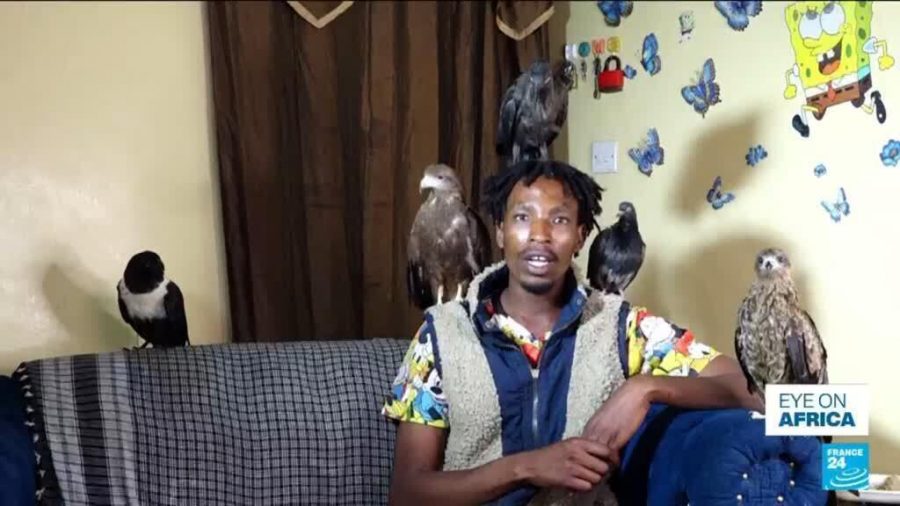
Kenya’s Birdman Captivates Hearts with His Unique Conservation Efforts
In a world often driven by fast-paced technology and fleeting trends, a man from Nairobi, Kenya, has found a way to capture the attention and affection of millions online. Known as “Birdman,” he has gained viral fame by sharing his remarkable journey of rescuing and rehabilitating injured wild birds. However, his newfound popularity has also raised significant health concerns, prompting authorities to weigh in on the implications of his unconventional lifestyle.
The Journey of the Birdman
Once a homeless individual navigating the bustling streets of Nairobi, the Birdman, whose real name is Magutha, discovered his passion for caring for injured birds during a particularly challenging phase of his life. “Taking care of these birds gave my life meaning and purpose,” Magutha shared in an interview, reflecting on how his experiences led him to form a bond with these creatures. His social media platforms are filled with videos showcasing his interactions with the birds, emphasizing not only their rehabilitation but also the joy they bring to his life.
A Conservation Message with a Personal Touch
Magutha’s mission extends beyond merely caring for his feathered friends; he hopes to inspire others to recognize the importance of wildlife conservation. His videos often feature heartwarming moments of him feeding, nurturing, and even playing with the birds, showcasing their personalities and the joys of rehabilitation. “These birds are not just animals to me; they are my friends and companions. I want people to see their beauty and understand the need to protect them,” he explained.
Going Viral: The Impact of Social Media
As his videos gained traction, the Birdman amassed a substantial following, with millions tuning in to witness his day-to-day interactions with the birds. This digital platform has allowed him to spread awareness about wildlife conservation on an unprecedented scale. However, the rapid growth of his online presence has also attracted attention from health officials concerned about potential zoonotic diseases—illnesses that can be transmitted from animals to humans.
Health Concerns Arise
The controversy erupted when videos surfaced showing Magutha dining alongside his birds, sharing food from the same plate. Health professionals began to express their worries about the risks associated with such practices, warning that sharing food with animals can lead to the transmission of diseases like salmonella and avian influenza. In response to these concerns, public health officials urged the Birdman to adopt safer practices to protect both himself and the birds.
Magutha’s Response to Health Warnings
In the face of criticism, Magutha remains steadfast in his beliefs. He dismisses the health concerns as exaggerated, insisting that his birds are healthy and free to leave whenever they choose. “I have built a bond with them, and they trust me. They know they can fly away, but they choose to stay because they feel safe here,” he contended. His conviction highlights a critical conversation about the balance between conservation efforts and public health safety.
The Broader Conversation on Wildlife Conservation
While the Birdman’s story is one of hope and resilience, it also underscores the complexities inherent in wildlife conservation. As people become more involved with nature, the potential for human-animal interactions raises questions about health risks. Experts advocate for a cautious approach to ensure both wildlife and human populations remain safe. Nevertheless, Magutha’s passion for his cause continues to resonate with many, sparking discussions about the importance of protecting vulnerable species.
Conclusion: A Continued Journey
The captivating story of Kenya’s Birdman transcends mere entertainment; it serves as a reminder of the profound connections we can form with nature. As he navigates his dual role as a caregiver and a viral sensation, the Birdman remains committed to his mission, advocating for wildlife conservation while addressing the emerging health concerns that accompany his unique lifestyle. His journey is far from over, and as he continues to evolve, so does the conversation surrounding the intersection of human compassion and the natural world.