Macron’s European Popularity Contrasts with Domestic Unrest Ahead of 2027 Election
As Labour Day is celebrated around the world, French President Emmanuel Macron finds himself in a paradoxical position. While he enjoys significant popularity across Europe, his standing at home is markedly different, raising questions about the future political landscape in France.
The Current Sociopolitical Climate
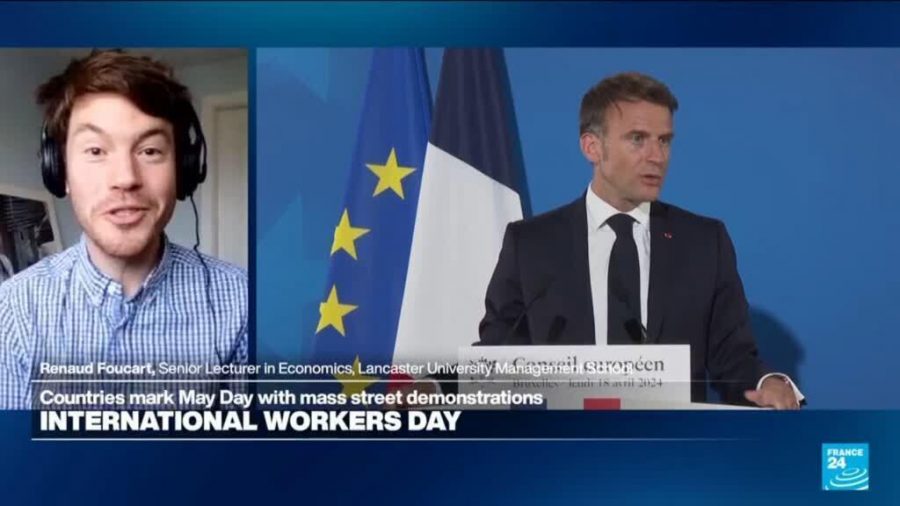
Dr. Renaud Foucart, a Senior Lecturer in Economics at Lancaster University, provides an insightful analysis of the sociopolitical and economic challenges facing France as the nation heads towards the crucial 2027 election. With reforms, particularly in the pension sector, currently stalled, May 1st becomes a symbolic “victory lap” for social democrats who see it as an opportunity to rally support and highlight their achievements.
Pension Reform and Economic Struggles
The pension reform, which has been a centerpiece of Macron’s agenda, is now frozen, leaving many French citizens feeling uncertain about their financial future. This has led to widespread discontent, particularly among younger generations who are concerned about the sustainability of their retirement plans. The failure to implement these vital reforms has become a focal point for opposition parties, who are eager to capitalize on the discontent.
The Political Landscape: Fractures and Uncertainties
Amidst this backdrop of economic anxiety, the political landscape in France appears increasingly fractured. The far-right and left-wing parties are experiencing internal divisions, complicating the situation further. These fractures have created a level of unpredictability that could significantly influence the outcomes of future elections.
- Far-Right Challenges: The far-right, traditionally a stronghold in French politics, faces its own challenges as factions within the party grapple with differing ideologies and strategies.
- Left-Wing Disarray: Meanwhile, left-wing parties are also struggling with unity, as various groups attempt to define their collective identity and approach to key issues.
The Impending Crisis for the Next Leader
Dr. Foucart warns that whoever takes the helm after the 2027 elections will inherit a series of deferred crises. The combination of economic stagnation, social unrest, and a deeply polarized political environment suggests that the next leader will face immediate challenges that could lead to unpopularity from the outset.
“Whoever is in charge will be immediately highly unpopular,” Dr. Foucart asserts, highlighting the daunting task ahead for the next president. The stakes are high as the next administration will need to navigate these turbulent waters, addressing not only the grievances of the populace but also the pressing economic issues that have been put on the back burner.
The Broader European Context
Despite these challenges at home, Macron’s popularity abroad stands in stark contrast. Many European leaders view him as a stabilizing force in an increasingly fragmented continent. His approach to issues such as climate change, European unity, and economic collaboration has resonated well beyond France’s borders, showcasing a leader who is seen as proactive and engaged on the world stage.
This dichotomy raises important questions about national identity and leadership in France. As Macron continues to navigate his presidency, the implications of his domestic unpopularity juxtaposed with his international acclaim will be a critical aspect of the political narrative leading up to the next election.
Conclusion
As the political climate continues to evolve, the challenges posed by economic stagnation and social unrest are likely to dominate discussions surrounding the future of French leadership. The upcoming elections will not only determine the next president but will also shape the trajectory of France as it grapples with its identity and role in a rapidly changing Europe.