Introduction
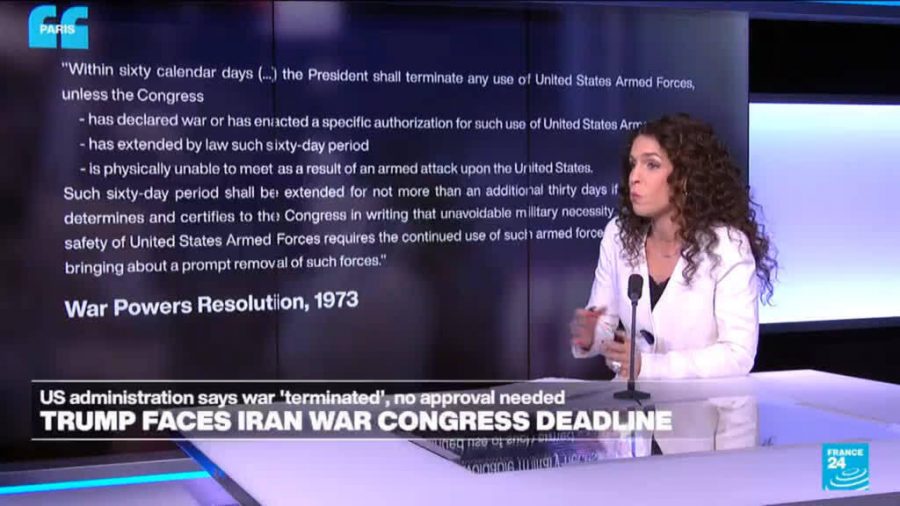
This Friday marks a significant moment in U.S. military engagement with Iran, as it will be 60 days since President Donald Trump officially notified Congress of the initiation of hostilities against the Middle Eastern nation. Under the War Powers Resolution, this timeline necessitates congressional approval for any military action to continue beyond the stipulated period. However, a disagreement has emerged between lawmakers and the Trump administration regarding the interpretation of this deadline.
Understanding the War Powers Resolution
Enacted in 1973, the War Powers Resolution was designed to limit the President’s ability to engage U.S. forces in hostilities without congressional consent. According to the law, the President must notify Congress within 48 hours of deploying military forces, and after 60 days, any continued military action requires congressional approval.
The Current Situation with Iran
On March 2, President Trump formally notified Congress of the initiation of military action against Iran, a move that has since escalated tensions in the region. As the 60-day mark approaches, the critical question remains: will Congress authorize the continuation of hostilities?
Contention Over the Deadline
The Trump administration has taken a unique stance on the timeline set by the War Powers Resolution. On Thursday, Pete Hegseth, a prominent supporter of the President, addressed Congress, asserting that the recent ceasefire with Iran effectively “pauses” the clock on the 60-day requirement. This interpretation suggests that the administration believes military engagement is not ongoing during the ceasefire, thereby extending the timeline for congressional approval.
Congressional Reactions
Lawmakers have expressed a range of opinions on this interpretation. Some members of Congress argue that the ceasefire should not exempt the administration from seeking approval for military action. They contend that the War Powers Resolution’s intent is to ensure that Congress remains an active participant in decisions of war, maintaining a system of checks and balances.
- Support for Military Action: Some lawmakers believe military action is justified to protect U.S. interests and allies in the region.
- Opposition to Military Engagement: Others argue that further military intervention could lead to prolonged conflict and advocate for diplomatic solutions.
- Calls for Transparency: Many members are demanding transparency from the administration regarding the criteria for military engagement and the ongoing strategy in Iran.
The Implications of Congressional Approval
If Congress does not grant approval for continued military action, it could force the administration to either withdraw troops or seek alternative strategies. This decision would not only impact U.S. relations with Iran but also set a precedent for future military engagements. A failure to secure congressional support could be viewed as a significant political setback for President Trump and his administration.
International Perspectives
The international community is closely monitoring the situation. France24 International Affairs Editor Kethevane Gorjestani has highlighted the global implications of U.S. military actions and the importance of a unified approach to handling tensions with Iran. The potential for conflict escalation remains high, and how the U.S. government navigates this deadline could have lasting effects on international relations.
Conclusion
As the deadline approaches, the discourse surrounding U.S. military action in Iran will undoubtedly intensify. The resolution of this issue will require careful consideration from both the Trump administration and Congress, as the stakes are high not only for U.S. foreign policy but also for regional stability in the Middle East.