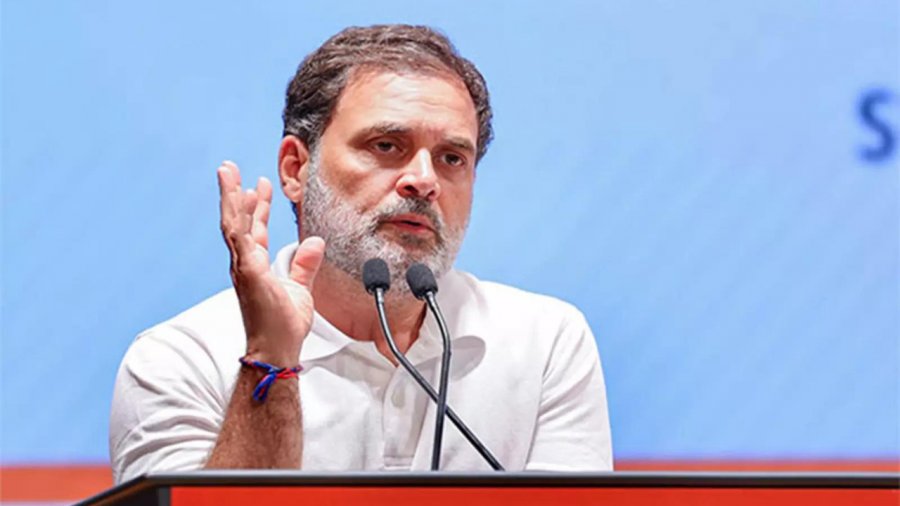
Allahabad High Court Dismisses Plea Against Rahul Gandhi
In a significant ruling, the Allahabad High Court has dismissed a plea seeking to register a First Information Report (FIR) against Congress leader Rahul Gandhi. The plea alleged that Gandhi’s remarks during an All India Congress Committee (AICC) office inauguration in 2025 were seditious and detrimental to national sentiment.
Background of the Case
The controversy arose when Gandhi reportedly referred to the “Indian State” as an opponent, a statement that the petitioner claimed incited anti-national sentiments. The remarks were made during a high-profile event, garnering significant media attention and stirring public debate about the implications of such statements by prominent political figures.
The petitioner, whose identity remains undisclosed, argued that Gandhi’s comments were not only provocative but also posed a threat to the integrity of the nation. The plea urged the court to take action against Gandhi, emphasizing that such statements could lead to unrest and undermine public order.
Court’s Decision
Justice Vikram D. Chauhan presided over the case and ultimately rejected the petitioner’s request. In his ruling, Justice Chauhan upheld the decision of a lower court, asserting that the remarks made by Gandhi did not warrant the filing of an FIR. This dismissal highlights the judiciary’s position on the need for careful consideration before tagging political speech as seditious.
The court’s decision has drawn mixed reactions from various political and social groups. Supporters of Gandhi argue that the ruling underscores the importance of free speech, especially in a democratic setup where dissent is a crucial aspect of political discourse. They assert that Gandhi’s comments, while provocative, should be viewed in the context of political expression rather than an outright attack on the state.
Public Reaction
On the other hand, critics of Gandhi have expressed disappointment with the ruling, claiming that it sets a troubling precedent. They argue that leaders must be held accountable for their words, especially when they can potentially incite unrest or division among the populace. The issue has sparked a broader discussion about the responsibilities of public figures in their rhetoric and the fine line between political speech and sedition.
Implications for Political Discourse
This case is emblematic of the ongoing tensions in Indian politics, where the boundaries of free speech and national integrity are constantly being tested. As political leaders navigate the complexities of public opinion and social media, their comments are scrutinized more than ever, prompting questions about the impact of their words on national unity.
- Political Speech vs. Sedition: The ruling raises questions about how political speech is perceived in India’s legal framework.
- Free Speech Concerns: Advocates for free speech may see this as a victory for open dialogue.
- Future Legal Challenges: The decision may set a precedent for how similar cases are handled in the future.
As the political landscape in India continues to evolve, cases like this will undoubtedly shape the discourse around accountability and expression in the realm of politics. The Allahabad High Court’s dismissal of the plea against Rahul Gandhi serves as a reminder of the delicate balance between safeguarding national interests and upholding democratic freedoms.