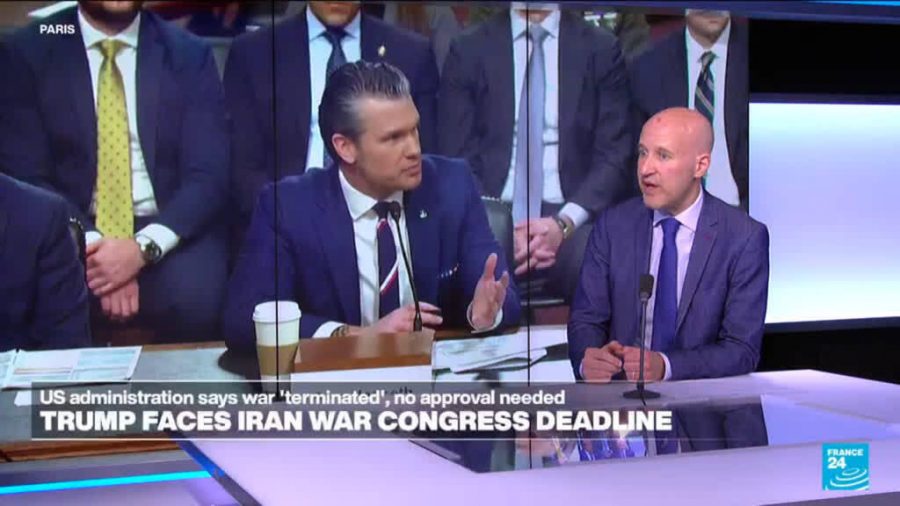
US Administration Declares End to Military Action Amid Legislative Stalemate
The ongoing debate surrounding the War Powers Resolution in the United States has reached a critical juncture as lawmakers grapple with the implications of military action without congressional approval. With the 60-day deadline approaching, the administration’s assertion that a conflict has been ‘terminated’ raises questions about the future of military engagements and the necessity of congressional oversight.
Understanding the War Powers Resolution
Enacted in 1973, the War Powers Resolution was designed to ensure that Congress retains the authority to declare war and oversee military operations. According to the legislation, the President is required to consult with Congress before introducing U.S. forces into hostilities. If such military action persists beyond 60 days, the President must seek congressional approval to continue operations or withdraw troops.
Current Situation: A Stalemate in Congress
As the deadline looms, U.S. lawmakers find themselves at an impasse, unable to reach a consensus on the continuation of military engagements. The Biden administration has taken the position that current military actions have concluded, effectively sidestepping the need for further congressional authorization. This has sparked intense debate among lawmakers, some of whom argue that the executive branch is overstepping its bounds by declaring an end to hostilities without formal approval.
- Proponents of Congressional Oversight: Many lawmakers advocate for a robust exercise of congressional authority, emphasizing the need for transparency and accountability in military decisions. They argue that the War Powers Resolution is a crucial mechanism for preventing unchecked military action.
- Critics of the Administration’s Stance: Critics contend that the administration’s declaration undermines the intent of the War Powers Resolution, potentially setting a dangerous precedent for future military engagements.
Douglas Herbert’s Insights on the Situation
In a recent analysis, France24 International Affairs Commentator Douglas Herbert weighed in on the implications of the ongoing deadlock. He highlighted the historical context of the War Powers Resolution, noting that it was enacted in response to the Vietnam War, a conflict that underscored the necessity of legislative oversight in military affairs. Herbert pointed out that the current situation is reminiscent of past debates, as lawmakers confront the balance of power between the executive and legislative branches.
The Broader Implications for U.S. Foreign Policy
The deadlock in Congress raises broader questions about the future of U.S. foreign policy and military engagements around the world. As the administration navigates complex global challenges, the inability to reach consensus on military action could hinder the U.S.’s ability to respond effectively to emerging threats. Additionally, the perception of a fragmented legislative process may impact America’s standing on the international stage.
Looking Ahead: The Need for Resolution
As lawmakers continue to debate the War Powers Resolution, it is clear that a resolution is needed to clarify the roles of Congress and the President in military affairs. The stakes are high, and the outcome of this debate will have lasting implications for the future of U.S. military engagement and the principles of democratic oversight.
In conclusion, the current deadlock over the War Powers Resolution serves as a reminder of the complexities of governance in times of military conflict. As lawmakers work to resolve their differences, the need for a coherent strategy that respects both the authority of Congress and the responsibilities of the executive branch remains paramount.