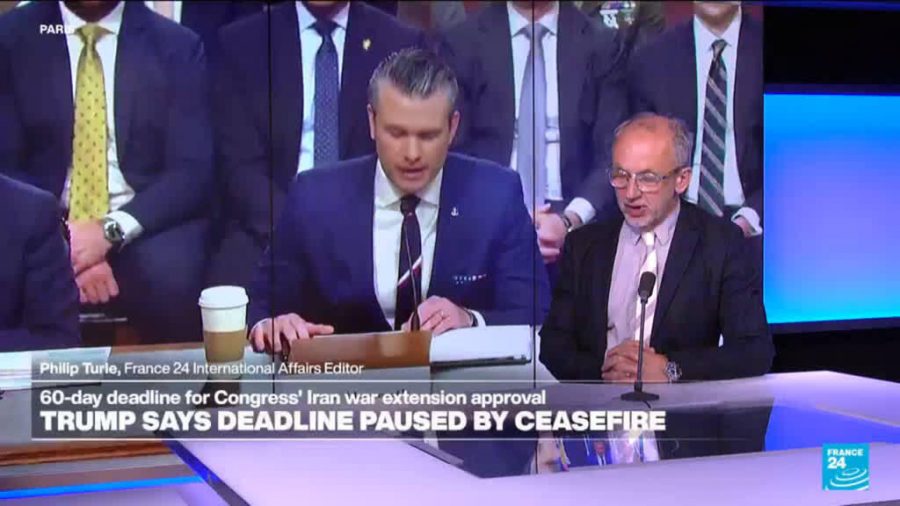
Congress at a Crossroads: The Impending 60-Day Deadline
As tensions escalate in the Middle East, the United States Congress finds itself in a state of paralysis over the War Powers Resolution, which mandates that lawmakers must approve continued military engagement or mandate troop withdrawal once hostilities extend beyond 60 days. With the deadline looming and no resolution in sight, the stakes are higher than ever.
The War Powers Resolution: A Brief Overview
Enacted in 1973, the War Powers Resolution was designed to check the President’s power to commit the U.S. to armed conflict without congressional consent. Under this resolution, Congress is required to act within 60 days of military engagement, either by granting approval for continued military action or by calling for troop withdrawal. This framework was intended to ensure that the legislative branch has a crucial role in decisions that could lead to war.
The Current Situation
With the 60-day mark fast approaching, lawmakers are grappling with the implications of their decisions. The standoff highlights the deep divisions within Congress, with some members advocating for a more aggressive military posture in Iran, while others are calling for restraint and a focus on diplomacy.
Insights from Experts
Douglas Herbert, an International Affairs Commentator for France24, emphasizes the significance of this moment in U.S. politics. “The impasse reflects a broader struggle over the direction of U.S. foreign policy, particularly in the context of Iran, a nation that has been a focal point of contention for decades. If Congress fails to act, it risks undermining its authority and setting a precedent for unchecked executive power in matters of war and peace,” Herbert asserts.
Implications of Inaction
The potential consequences of inaction are manifold. A failure to reach an agreement could lead to prolonged military engagement without the necessary legal framework, raising questions about accountability and the limits of executive power. Furthermore, it could embolden adversaries who perceive a divided Congress as a sign of weakness in American governance.
The Political Landscape
Internally, the divide within Congress mirrors the broader political landscape of the nation. Republicans and Democrats find themselves at odds not only over military strategy but also over the very interpretation of the War Powers Resolution. While some lawmakers argue for a robust military presence to deter Iranian aggression, others advocate for a diplomatic approach, seeking to revive negotiations over Iran’s nuclear program.
Public Opinion and Legislative Pressure
Public sentiment regarding military involvement in Iran is also a crucial factor. Polls indicate a significant portion of the American populace is wary of further military entanglements, reminiscent of past conflicts that have drawn the U.S. into protracted wars. As the deadline approaches, lawmakers are feeling the pressure from constituents who are increasingly vocal about their expectations for a peaceful resolution.
Looking Ahead
The coming days will be critical as Congress attempts to navigate this complex issue. With the 60-day deadline fast approaching, the possibility of a last-minute deal remains, but the likelihood of a prolonged stalemate is equally plausible. As the situation develops, all eyes will be on Capitol Hill, where the fate of U.S. military involvement in Iran hangs in the balance.
Conclusion
The ongoing deadlock over the War Powers Resolution serves as a stark reminder of the challenges facing American democracy in times of crisis. As lawmakers struggle to find common ground, the implications of their decisions will resonate far beyond the halls of Congress, affecting U.S. foreign policy and military engagement for years to come.