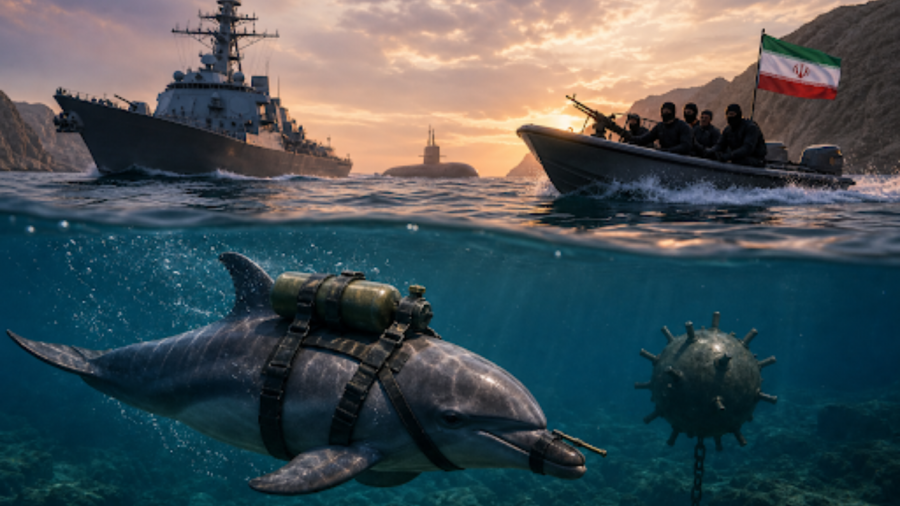
Iran’s Unconventional Warfare Strategy
In a surprising escalation of military tactics, Iran is reportedly contemplating the use of trained dolphins as mine-carriers to target U.S. Navy ships in the strategically vital Strait of Hormuz. This development highlights a significant shift in Iran’s approach to asymmetric warfare amid increasing regional tensions and the ongoing economic blockade imposed by the United States.
The Role of Dolphins in Military Operations
Dolphins have long been recognized for their intelligence and agility, making them valuable assets in military applications. Iran’s interest in using these marine mammals is not entirely novel; the country has previously invested in training dolphins for military purposes. The potential deployment of mine-carrying dolphins represents a unique and unconventional method of warfare that could pose significant challenges for U.S. naval operations in the region.
Background: Rising Tensions in the Strait of Hormuz
The Strait of Hormuz, a crucial chokepoint for global oil shipments, has been a flashpoint for U.S.-Iranian tensions. Recent months have seen an escalation in hostilities, with Iran’s hardline factions interpreting the U.S. economic blockade as an act of war. As diplomatic relations have deteriorated, the possibility of military confrontation has grown, prompting Iran to explore innovative methods to bolster its defense capabilities.
The Strategic Implications of Mine-Carrying Dolphins
Iran’s consideration of mine-carrying dolphins could have far-reaching implications for U.S. Navy operations. Traditional naval warfare relies heavily on advanced technology and firepower, but the introduction of bio-engineered tactics may disrupt conventional strategies. Here are some potential implications:
- Surprise Tactics: Dolphins can operate stealthily, making it difficult for naval forces to detect their presence until it is too late.
- Psychological Warfare: The use of trained animals can create fear and uncertainty among naval personnel, potentially impacting operational effectiveness.
- Cost-Effective Solutions: Training dolphins may be seen as a low-cost alternative to expensive military hardware, allowing Iran to maximize its limited resources.
Historical Context: Iran’s Use of Marine Mammals
Iran’s military has a documented history of utilizing marine mammals, dating back to the 1980s when the country acquired dolphins from the Soviet Union. These dolphins were trained for various tasks, including mine detection and reconnaissance missions. The renewed focus on these capabilities suggests a strategic pivot in Iran’s military doctrine, emphasizing unconventional warfare as a viable option against a technologically superior adversary.
International Reactions and Future Considerations
The prospect of Iran deploying trained dolphins raises important questions on the international stage. While some may dismiss the idea as unconventional or impractical, the implications for naval security and regional stability cannot be overlooked. As U.S. forces maintain a significant presence in the Gulf region, any movement by Iran to utilize marine mammals could trigger heightened military readiness and countermeasures.
In conclusion, Iran’s consideration of trained dolphins as mine-carriers represents a bold and unconventional strategy in the realm of asymmetric warfare. As regional tensions continue to mount, the world will be closely watching how this situation unfolds and what it means for the future of U.S.-Iranian relations.