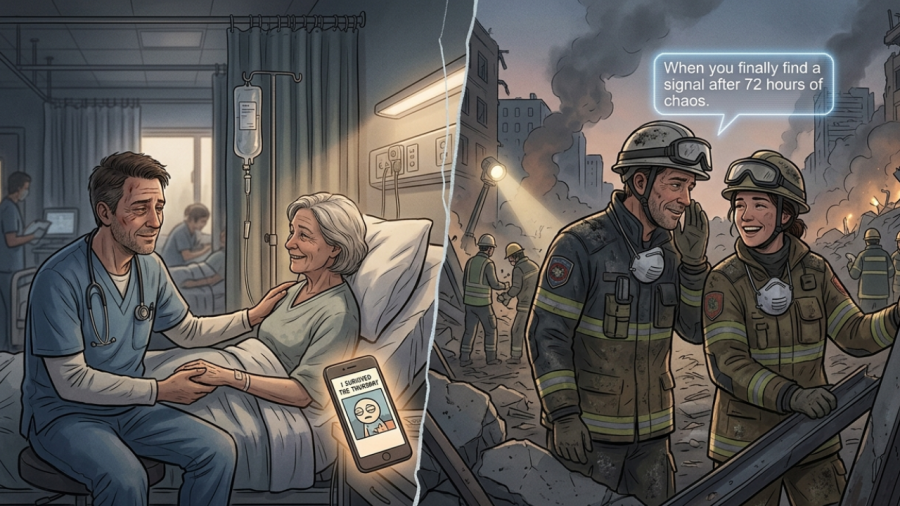
Laugh in the Face of Darkness
In times of adversity, humor stands as humanity’s oldest coping mechanism. Amidst hardship and despair, dark humor emerges as a vital survival tool, providing a defiant spark against overwhelming realities.
The Role of Gallows Humor
Gallows humor, characterized by its ability to find levity in the bleakest situations, serves as a unique form of resilience. It allows individuals and communities to confront their fears while simultaneously diffusing the tension that accompanies traumatic experiences.
This type of humor is distinct from denial; rather than ignoring difficult truths, gallows humor acknowledges them while adding a layer of absurdity. By laughing at what frightens us, we can reclaim some power over our circumstances.
Historical Context of Dark Humor
The roots of dark humor can be traced back throughout history, often surfacing in times of crisis. From soldiers during wartime to individuals facing terminal illness, laughter has been a means of coping with the unthinkable. It builds camaraderie, fosters community support, and reminds us that we’re not alone in our struggles.
Gen Z and the Meme Revolution
In the contemporary landscape, Generation Z has embraced humor as a coping mechanism through the proliferation of memes. These bite-sized comedic expressions often tackle serious issues like mental health, social injustice, and global crises, making them relatable and accessible.
Memes serve as a modern form of crisis comedy, allowing young people to engage with heavy topics while providing a sense of relief. Sharing a meme that encapsulates a shared struggle creates a collective experience, fostering connection and mutual understanding.
The Psychological and Biological Benefits of Laughter
The act of laughing has profound psychological and biological benefits. Studies have shown that laughter can reduce stress, lower blood pressure, and even enhance immune function. Psychologically, humor can provide a new perspective, allowing individuals to reframe their challenges in a less daunting light.
- Stress Reduction: Laughter triggers the release of endorphins, the body’s natural feel-good chemicals.
- Enhanced Resilience: Humor can improve our ability to cope with adversity, leading to better mental health outcomes.
- Connection: Sharing a laugh fosters social bonds and creates a sense of community.
Moreover, in a world increasingly marked by uncertainty, humor offers a sanctuary. It allows us to confront fears and anxieties with a sense of agency, transforming our darkest moments into opportunities for connection and healing.
Conclusion: Embracing Laughter in Tough Times
As we navigate the complexities of life, embracing humor—especially dark humor—can be a powerful tool in our arsenal. It encourages resilience, fosters community, and reminds us that even in the face of despair, we can find reasons to laugh. In the end, humor may not solve our problems, but it can certainly lighten the burden, illuminating the path forward.