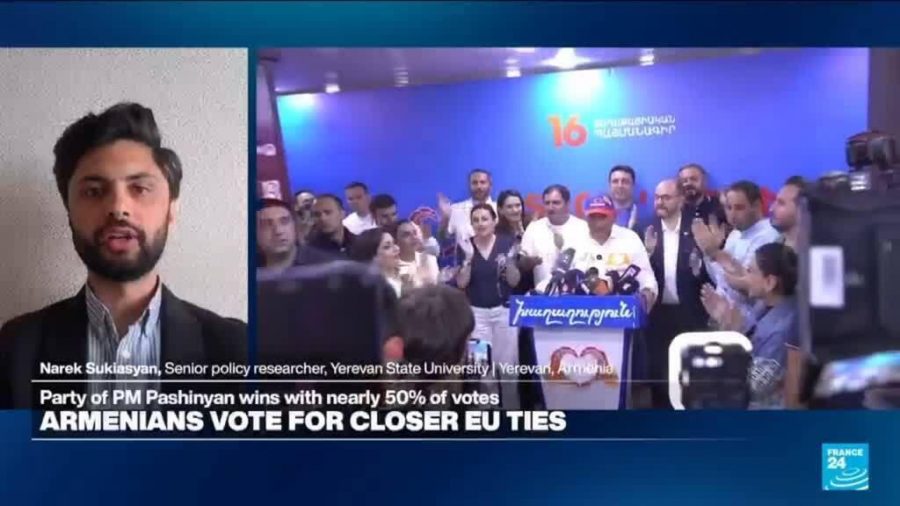
Armenia’s Elections: A Struggle Against Polarization and Democratic Backsliding
In the wake of Armenia’s recent elections, the political landscape has revealed deep fissures characterized by extreme polarization, rampant hate speech, and widespread stigmatization. As the country navigates its complex realities, experts warn that these issues pose significant challenges to the consolidation of democracy.
A Divided Nation
Dr. Narek Sukiasyan, a Senior Policy Researcher at the Friedrich Ebert Stiftung Armenia and an Adjunct Lecturer at the American University of Armenia, highlights the gravity of the situation. During a recent discussion with FRANCE 24’s Charles Pellegrin, he emphasized that the elections were about much more than just foreign policy. While Prime Minister Nikol Pashinyan’s victory signifies a potential shift towards closer ties with the European Union, it is set against a backdrop of domestic strife and social discord.
The Implications of Pashinyan’s Victory
Pashinyan’s government is now faced with the delicate task of balancing Armenia’s historical dependency on Russia with its aspirations for a more Western-aligned future. Dr. Sukiasyan notes that this balance is fraught with challenges. “The Prime Minister must carefully manage Armenia’s dependence on Russia while promoting a vision for the country that includes European integration,” he states.
Voter Concerns Beyond Foreign Policy
However, the election results reflect a multitude of voter concerns that transcend foreign policy. Security, social issues, economic vulnerability, and the legacy of conflict played pivotal roles in shaping the electorate’s decisions. Voters are increasingly aware of the multifaceted nature of their country’s problems, which include the ongoing tensions with Azerbaijan, economic instability, and a fragmented society.
Navigating Multiple Transitions
Armenia is currently navigating a series of transitions, ranging from war and peace to dependence and diversification. The electorate is torn between the desire for democratic consolidation and the realities of a polarized political environment. Dr. Sukiasyan explains that this polarization is not merely a political challenge but a societal one that threatens the very fabric of Armenian democracy.
The Rise of Hate Speech
One of the most alarming trends observed during the election cycle was the rise of hate speech, which has become increasingly prevalent in political discourse. This toxic rhetoric not only alienates various segments of society but also exacerbates existing divisions. Dr. Sukiasyan warns that such language can undermine democratic processes and deter citizen engagement in political life.
A Call for Unity
As Armenia moves forward, the need for unity and dialogue among its citizens has never been more pressing. Leaders must prioritize reconciliation efforts and create platforms for constructive conversation to bridge the gaps that have deepened over time. Only through collective effort can Armenia hope to heal its divisions and build a more stable and democratic future.
- Key Takeaways:
- Pashinyan’s victory signals a potential shift towards the West.
- The election reveals deep societal divisions and challenges.
- Hate speech and polarization threaten democratic consolidation.
- Reconciliation and dialogue are essential for national unity.
In conclusion, Armenia stands at a crossroads, with its democratic future hanging in the balance. As the nation grapples with the implications of its recent elections, the path forward will require careful navigation of both internal challenges and external relationships.