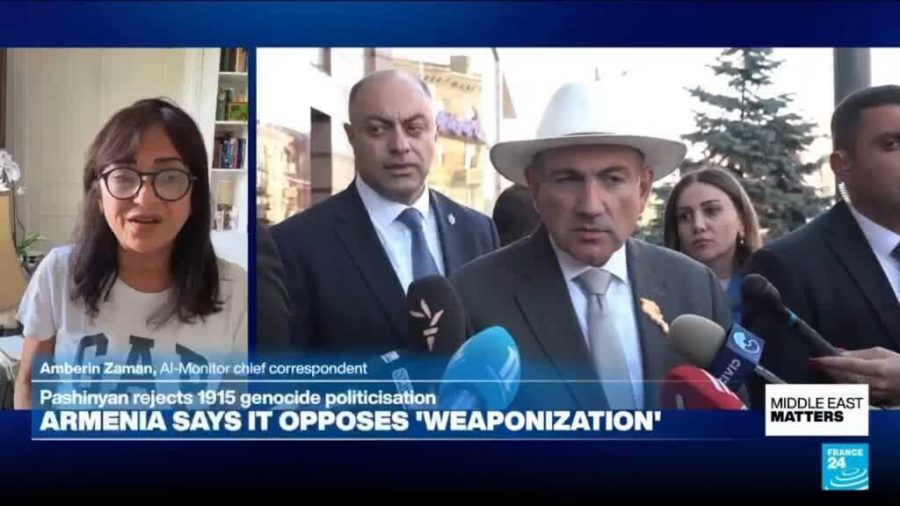
Armenia’s PM Pashinyan Denounces Weaponization of Genocide Recognition
In a recent statement, Armenian Prime Minister Nikol Pashinyan emphasized his country’s reluctance to engage with what he described as the ‘weaponization’ of the 1915 genocide. His comments come amidst a complex backdrop of shifting geopolitical alliances and historical grievances that continue to shape the discourse in the region.
The Context of Pashinyan’s Warning
The Armenian genocide, which saw the systematic extermination of over a million Armenians during World War I, has long been a contentious issue in international relations, particularly involving Turkey. The recognition of this atrocity has been used as both a moral imperative and a political tool by various states, often leading to strained diplomatic ties.
Pashinyan’s remarks were made during an appearance on France 24’s Middle East Matters, where he was joined by notable correspondents including Noga Tarnopolsky from Jerusalem and Amberin Zaman, Chief Correspondent for Al Monitor. Their discussions highlighted the evolving dynamics surrounding the recognition of the genocide and its implications for current international relationships.
Zaman’s Perspective on Israel’s Recognition
Amberin Zaman articulated a critical view regarding Israel’s recent acknowledgment of the Armenian genocide, framing it as a strategically motivated decision rather than a genuine effort at historical accountability. She described this move as “nakedly cynical,” arguing that it is significantly influenced by the ongoing Gaza war, the growing tensions with Turkey, and the shifting alliances in the Middle East.
This perspective raises important questions about the sincerity of such recognitions and whether they are truly acts of solidarity with victims of historical injustices or merely calculated maneuvers in the ever-evolving landscape of international politics.
The Broader Implications of Genocide Recognition
For Armenia, the recognition of the genocide remains a deeply emotional and significant issue. It is not merely a historical event but a core element of national identity and collective memory. As Pashinyan pointed out, the potential for this recognition to be weaponized poses a distinct threat, potentially leading to further tensions not just with Turkey but also among various regional players.
- Historical Context: The genocide of 1915 is a defining moment in Armenian history and has led to calls for recognition and justice for decades.
- Political Manipulation: The use of genocide recognition as a political tool can undermine its significance and the suffering of those affected.
- Geopolitical Shifts: The current dynamics in the Middle East, particularly related to Gaza and Turkey, complicate the narrative surrounding genocide recognition.
Pashinyan’s warning serves as a reminder of the delicate balance that must be maintained when discussing historical atrocities. While recognition is crucial for healing and justice, it must not be exploited for political gain. As the region continues to navigate through its historical grievances and contemporary conflicts, the call for genuine acknowledgment and respect for the past remains paramount.
Conclusion
The conversation around the Armenian genocide is far from over, and leaders like Pashinyan are advocating for a discourse that honors the victims without succumbing to the tactics of political manipulation. As the international community grapples with its historical responsibilities, the lessons learned from Armenia’s past may offer valuable insights into how to approach the recognition of atrocities in the present.