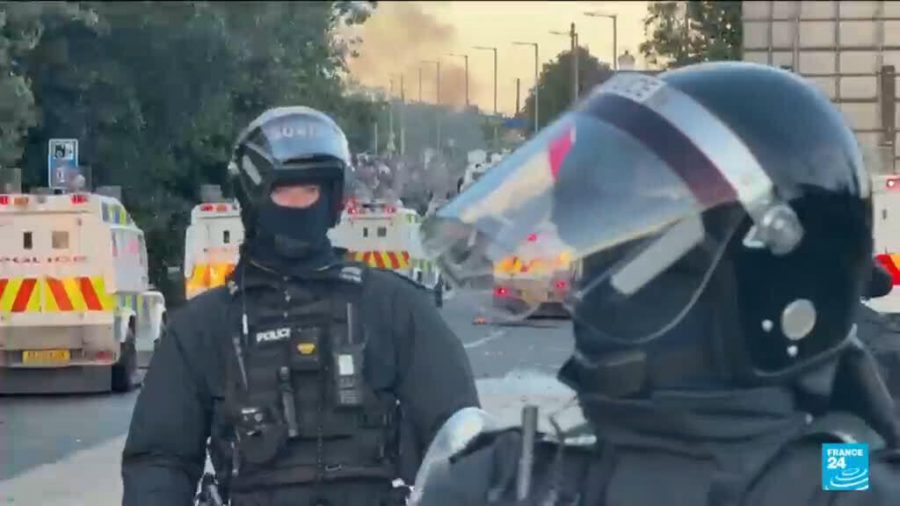
Violence erupted once again in Belfast, Northern Ireland, as police clashed with protesters for the second consecutive night. The unrest, sparked by a brutal stabbing that left one man seriously injured, saw demonstrators engage in violent confrontations, leading authorities to deploy water cannons in a bid to restore order.
Background of the Violence
The tensions in Belfast escalated dramatically following the stabbing of a man on a local street, which occurred just days prior to the protests. The incident, which resulted in the hospitalization of the victim, has ignited a wave of anger and frustration among local communities, particularly as the alleged assailant, a 30-year-old man from Sudan, faced court charges for attempted murder.
The Night of Chaos
On Wednesday evening, the situation turned chaotic as demonstrators took to the streets, wearing masks and armed with makeshift weapons. Protesters began tearing bricks from the walls of nearby homes and smashing sidewalks with sledgehammers to create projectiles to hurl at the police.
Witnesses reported that the crowd was particularly aggressive, using sections of a dismantled picket fence as shields against police efforts to disperse them. The atmosphere was charged with anger as protesters shouted slogans and voiced their demands, reflecting a broader sense of discontent within the community.
Police Response
In response to the escalating violence, police deployed water cannons to disperse the crowd, a tactic that has become increasingly common in riot situations. Officers in riot gear formed lines, attempting to push back the protesters who were determined to confront law enforcement.
The police reported that several officers sustained injuries during the clashes, as protesters hurled bricks, rocks, and bottles. Despite the aggressive tactics employed by the demonstrators, police remained focused on maintaining order and protecting the public.
Underlying Issues
The protests have brought to light not only the immediate anger surrounding the stabbing but also deeper societal issues regarding immigration and community relations in Northern Ireland. Many locals expressed their frustration over what they perceive as rising crime and insecurity linked to immigration, fueling tensions that have been simmering for some time.
As the situation continues to unfold, community leaders are calling for calm and dialogue, urging residents to seek peaceful resolutions rather than resorting to violence. However, the events of the past two nights demonstrate a growing divide that will require careful navigation and attention from both local authorities and community members.
Looking Ahead
The aftermath of the protests raises critical questions about the future of community relations in Belfast. As the police investigate the stabbing incident and the subsequent unrest, there is a pressing need for a comprehensive response that addresses both the immediate security concerns and the long-term societal issues at play.
Local leaders are now faced with the challenge of fostering a sense of unity and understanding in a time of division, while the police must grapple with managing public safety in an increasingly volatile environment.
- Key Points:
- Police used water cannons to disperse violent protesters in Belfast.
- A 30-year-old Sudanese man faces attempted murder charges following a stabbing.
- The protests highlight underlying tensions regarding immigration and crime.
- Community leaders call for dialogue and peaceful resolutions.
As Belfast seeks to heal from the recent violence, the road ahead will require collaboration, understanding, and a commitment to addressing the root causes of unrest.