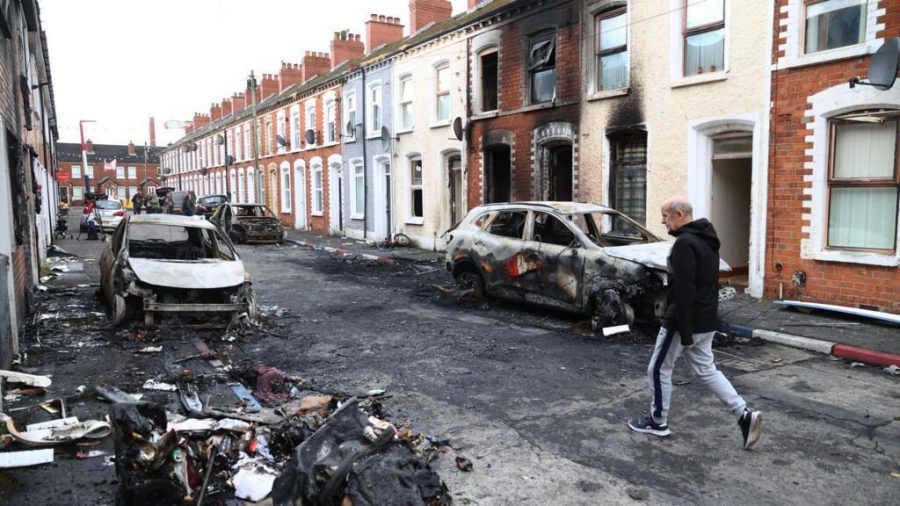
Belfast’s Anti-Immigrant Riots: Echoes of Sectarian Violence
This week, Belfast was once again thrust into the spotlight as anti-immigrant riots erupted, revealing deep-seated tensions that resonate with the city’s long history of sectarian violence. Residents and academics alike have drawn parallels between these recent events and the three decades of turmoil known as the Troubles, during which the city was marred by conflict between nationalist and unionist communities.
A City Divided
Belfast, the capital of Northern Ireland, has long been a focal point for sectarian division. For many, the recent riots are not merely isolated incidents but rather a continuation of a legacy that has shaped the city’s identity. The Troubles, which lasted from the late 1960s until the Good Friday Agreement in 1998, were characterized by violent confrontations, community segregation, and a pervasive atmosphere of distrust.
Current Events: A Flashpoint
The riots began earlier this week in the city’s east, with clashes that saw hundreds of individuals confront police forces. Protesters gathered under the banner of anti-immigrant sentiment, expressing fears over demographic changes and perceived threats to local culture. This unrest has sparked concerns about rising nationalism and xenophobia, echoing the sentiments of past conflicts.
Historical Context
- The Troubles: A period of intense conflict between the nationalist Catholic community, seeking unification with the Republic of Ireland, and the unionist Protestant community, desiring to remain part of the United Kingdom.
- Legacy of Violence: The sectarian strife left over 3,500 people dead and thousands more injured, creating a legacy of trauma and mistrust.
- Post-Conflict Challenges: Despite the peace agreement, Northern Ireland continues to grapple with issues of identity, community division, and sporadic violence.
Community Reactions
Local community leaders have expressed alarm at the rise in anti-immigrant rhetoric, arguing that it threatens the fragile peace established in the post-Troubles era. “We cannot afford to let history repeat itself,” said one resident, who wished to remain anonymous. “Our communities have suffered enough, and we should be working towards inclusion, not division.”
Academic Perspectives
Experts on Northern Ireland’s history have weighed in on the situation, emphasizing that the current unrest is rooted in a complex interplay of social, economic, and political factors. Dr. Sarah McMahon, a historian specializing in Northern Ireland, stated, “The legacy of the Troubles has created a fertile ground for fear and division. When people feel threatened, they often look for scapegoats, and immigrants are an easy target. This cycle of violence and blame must be broken.”
The Road Ahead
As Belfast grapples with the aftermath of the riots, the need for dialogue and reconciliation becomes increasingly urgent. Community organizations are calling for initiatives aimed at bridging divides and fostering understanding among the diverse populations that call the city home.
In a time when the world is witnessing rising nationalism and xenophobia, Belfast stands at a crossroads. The way forward will require a concerted effort to address the root causes of division while promoting unity and inclusivity.