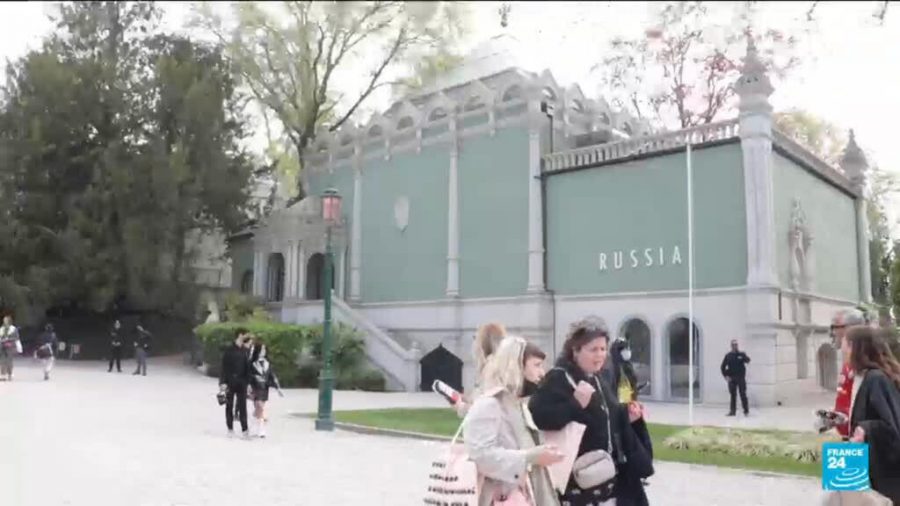
Venice Biennale Jury Resigns Amid Geopolitical Tensions
The entire international jury of the Venice Biennale resigned on Thursday, just nine days before the prestigious event was set to open, citing controversy surrounding Russia’s participation and a decision to bar prizes for countries accused of crimes against humanity, including Russia and Israel.
Background of the Controversy
The controversy began when the Biennale organizers announced that they would not be awarding prizes to countries accused of crimes against humanity, a move that was seen as a response to the ongoing conflicts in Ukraine and Palestine. This decision was met with criticism from some quarters, with some arguing that it was an attempt to politicize the event.
The Jury’s Decision
The jury, which was composed of international art experts, decided to resign in protest against the Biennale’s decision. In a statement, the jury said that they could not continue to participate in an event that was being used as a platform for political statements. The resignation of the jury has thrown the Biennale into chaos, with the announcement of winners, typically held at the opening, being postponed until the fair’s closing in November.
Implications of the Resignation
The resignation of the jury has significant implications for the Biennale and the art world as a whole. It highlights the challenges of navigating geopolitical tensions in the context of international cultural events. The Biennale, which is one of the most prestigious art events in the world, has always sought to promote cultural exchange and understanding. However, the current controversy has raised questions about the role of politics in art and the extent to which cultural events should be used as a platform for political statements.
Reaction from the Art Community
The art community has been quick to react to the news of the jury’s resignation. Some artists and curators have expressed support for the jury’s decision, citing the need for cultural events to take a stand against human rights abuses. Others have criticized the decision, arguing that it is an attempt to stifle free speech and creativity.
- The resignation of the jury has highlighted the challenges of navigating geopolitical tensions in the context of international cultural events.
- The controversy has raised questions about the role of politics in art and the extent to which cultural events should be used as a platform for political statements.
- The Biennale’s decision to bar prizes for countries accused of crimes against humanity has been met with both support and criticism from the art community.
The controversy surrounding the Venice Biennale is a reminder that art and politics are often intertwined, and that cultural events can be used as a platform for social and political commentary. As the art world continues to grapple with the implications of the jury’s resignation, one thing is clear: the Venice Biennale will be an event to watch in the coming months.