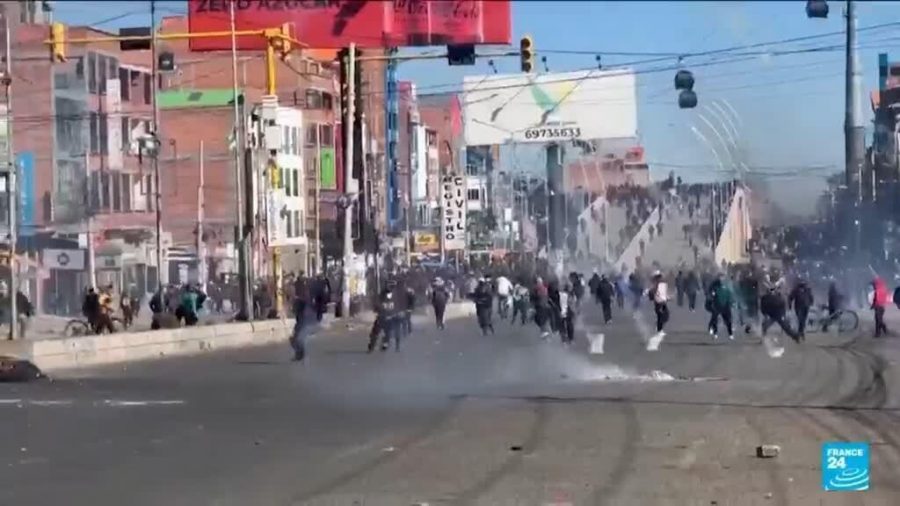
Bolivian police and military forces engaged in intense clashes with protesters on Saturday as tensions boiled over on the roads leading into La Paz. Demonstrators, demanding wage increases and addressing other grievances, erected blockades that paralyzed key routes into the nation’s administrative capital, escalating a standoff that has gripped the region.
Protesters Demand Economic Relief
The protests, which began earlier in the week, stem from growing frustrations among workers and citizens over stagnant wages and perceived government inaction on economic issues. Protesters have called for immediate wage increases to counter rising inflation, as well as improved labor conditions and more robust economic policies to alleviate financial hardship.
“The cost of living has skyrocketed, but our wages remain the same,” said Maria Quispe, one of the protesters. “We are here because we can no longer afford to live. The government must listen to us.”
Clashes Turn Violent
Authorities responded to the blockades with a heavy police and military presence, leading to violent confrontations. Tear gas was deployed as protesters hurled rocks and set up burning barricades to maintain their positions. According to local reports, several individuals were injured during the clashes, though official figures have yet to be released.
The blockades caused significant disruptions, with essential supplies unable to reach the capital. Local businesses and residents expressed growing concern over the prolonged standoff, which has begun to affect daily life in La Paz.
Government Calls for Dialogue
In response to the unrest, government officials have urged protesters to engage in dialogue rather than resorting to disruptive measures. “We understand the concerns of our citizens, but we must work together to find solutions without harming the economy or public safety,” said Interior Minister Eduardo del Castillo during a press briefing.
However, protest leaders have expressed skepticism about the government’s willingness to address their demands. They argue that past negotiations have often failed to yield meaningful results, leaving them with little choice but to escalate their actions.
International Reactions
The unrest in Bolivia has drawn attention from international observers, with human rights organizations urging both the government and protesters to exercise restraint. The United Nations has called for peaceful negotiations, emphasizing the importance of protecting the rights to peaceful assembly and freedom of expression.
As the standoff continues, the situation remains tense, with both sides showing no signs of backing down. Analysts warn that prolonged unrest could further strain Bolivia’s already fragile economy, making a resolution to the crisis all the more urgent.
- Key Issues: Wage demands, economic hardship, labor conditions
- Government Response: Calls for dialogue, deployment of security forces
- Impact: Supply chain disruptions, rising tensions in La Paz
For now, the roads to La Paz remain blocked, serving as a stark reminder of the deep-seated challenges facing Bolivia as it grapples with economic and social upheaval.