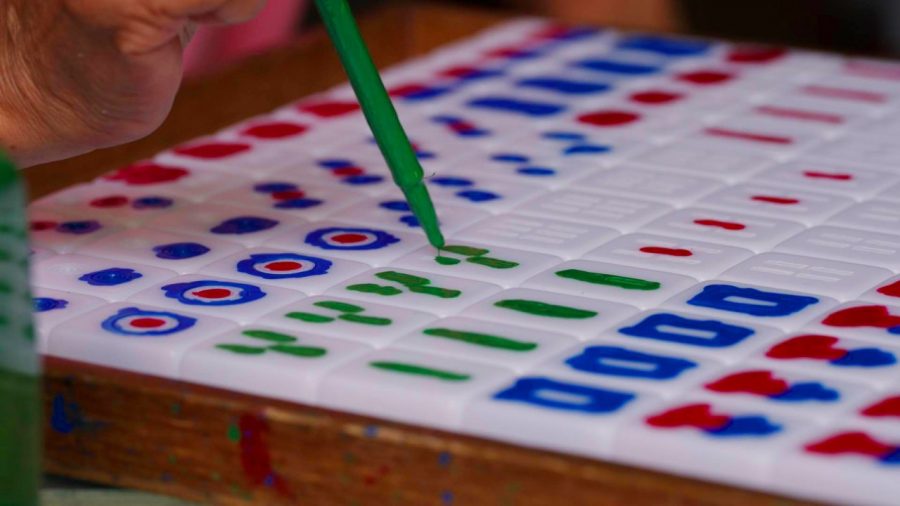
The Enduring Legacy of Mahjong Tile Carving
In recent years, a fascinating cultural phenomenon has emerged in America: a growing obsession with Mahjong. This traditional Chinese game, which has captivated players for centuries, has sparked renewed interest in its intricate components, particularly the art of Mahjong tile carving. As the last remaining artisans of this craft work diligently to preserve their skills, the question arises: can America’s newfound love for Mahjong be the saving grace for this fading art form?
A Craft on the Brink of Extinction
Mahjong tile carving is a meticulous process that requires years of practice and a deep understanding of the materials and techniques involved. The artisans, often working solo in small workshops, use traditional tools to hand-carve each tile from materials such as bamboo, bone, or plastic. Unfortunately, this once-thriving craft is now on the verge of extinction, with only a handful of skilled craftsmen left in the United States.
The Rise of Mahjong in American Culture
In the past few years, Mahjong has surged in popularity across the country, particularly among diverse communities seeking to reconnect with their heritage. Social media platforms have played a significant role in this resurgence, with groups dedicated to Mahjong popping up and players sharing their experiences. The game’s blend of skill, strategy, and social interaction has made it a favorite pastime for many, especially during the pandemic.
Meet the Masters of the Craft
Among the last remaining artists of Mahjong tile carving is Jane Li, a master craftsman whose family has been involved in the trade for generations. Jane’s workshop is a treasure trove of historical artifacts, showcasing the evolution of Mahjong tiles over the years. “Every tile tells a story,” she explains, as she delicately chisels a new piece. “These aren’t just game pieces; they are works of art that connect us to our culture and history.”
Challenges Facing the Artisans
Despite their passion and dedication, artisans like Jane face numerous challenges. The demand for handcrafted tiles is dwindling as mass production takes over, offering cheaper alternatives that lack the artistry of hand-carved pieces. Additionally, the older generations of craftsmen are retiring, and without a new wave of interest or training, the craft could soon be lost forever.
Can Mahjong Save the Craft?
With Mahjong’s increasing popularity, there’s hope that a revival of interest in the game could lead to a renewed appreciation for its artistic components. Enthusiasts are beginning to recognize the value of handcrafted tiles, leading to a niche market that honors the artistry behind the game. Local Mahjong clubs are organizing workshops and events that celebrate tile carving, fostering connections between players and artisans.
The Future of Mahjong Tile Carving
As Mahjong continues to thrive in America, the potential for revitalizing the art of tile carving grows. Community-driven initiatives and a newfound appreciation for craftsmanship may be the key to preserving this unique art form. The journey ahead will require collaboration between players, artisans, and cultural advocates to ensure that the legacy of Mahjong tile carving is not only remembered but celebrated.
- Support local artisans by purchasing handcrafted Mahjong tiles.
- Participate in Mahjong events to promote awareness of the craft.
- Encourage younger generations to learn about the art of tile carving.
In conclusion, while the fate of Mahjong tile carving hangs in the balance, there is hope that America’s love for the game can spark a renaissance for this fading craft. Through community engagement and a commitment to preserving tradition, the artistry behind Mahjong tiles may thrive once more.