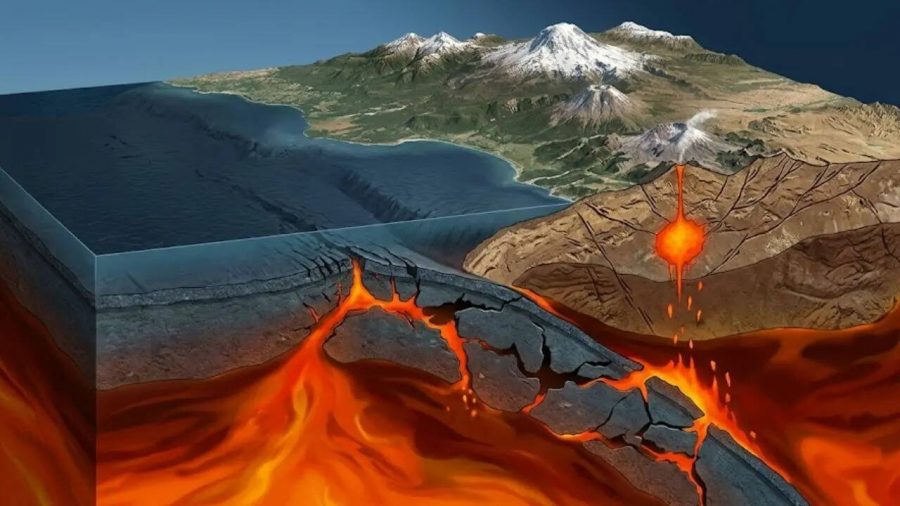
The Cascadia Subduction Zone: A Geological Time Bomb
The Cascadia Subduction Zone, a region known for its tectonic activity, is showing troubling signs of instability. Scientists have recently discovered that the tectonic plates beneath the zone are cracking, raising alarms about the potential for significant seismic activity in the future.
What is the Cascadia Subduction Zone?
The Cascadia Subduction Zone is a convergent boundary located off the coast of the Pacific Northwest, where the Juan de Fuca Plate is slowly sliding beneath the North American Plate. This geological phenomenon is responsible for the region’s seismic activity, including earthquakes and volcanic eruptions. The last major earthquake in this region occurred in 1700, and scientists believe it’s only a matter of time before another occurs.
The Recent Findings
Researchers have been closely monitoring the tectonic plates in the Cascadia Subduction Zone. Recent studies using advanced imaging technology have revealed cracks forming in the plates, which could indicate stress building up along the fault line. This stress accumulation is often a precursor to significant earthquakes.
- Crack Formation: The formation of cracks in tectonic plates suggests an increase in geological stress.
- Monitoring Techniques: Scientists are utilizing advanced imaging and seismic monitoring to track changes.
- Historical Context: The last major earthquake in the region occurred over 300 years ago.
Potential Impacts of a Major Earthquake
If a major earthquake were to occur as a result of the shifting tectonic plates, the impacts could be devastating. The Pacific Northwest has a dense population, and many cities, including Seattle and Portland, are located near the coastline. A significant quake could trigger tsunamis, landslides, and widespread destruction.
Preparedness and Response Strategies
In light of these findings, preparedness efforts are more crucial than ever. Local governments and emergency services are ramping up their readiness plans, educating the public about earthquake safety, and conducting drills to ensure that communities are prepared for the worst-case scenarios.
- Public Education: Informing residents about earthquake safety and preparedness.
- Infrastructure Improvements: Retrofitting buildings and bridges to withstand seismic activity.
- Emergency Response Plans: Developing comprehensive response strategies for various disaster scenarios.
The Future of the Cascadia Subduction Zone
The cracking of tectonic plates beneath the Cascadia Subduction Zone serves as a stark reminder of the power of nature and the unpredictability of geological phenomena. As scientists continue to study this region, the hope is that improved understanding will lead to better preparedness and potentially save lives in the event of a major earthquake.
In conclusion, while the cracking of Earth’s tectonic plates beneath the Cascadia Subduction Zone raises serious concerns, it also emphasizes the importance of vigilance and preparedness in the face of natural disasters. The Pacific Northwest must remain alert, as the forces beneath our feet continue to shift and evolve.