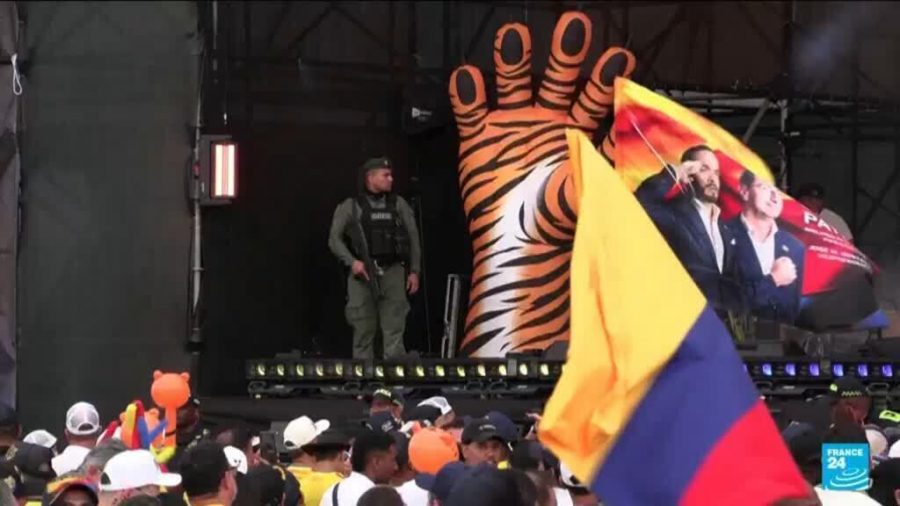
Colombia is bracing for one of its most pivotal presidential elections in recent memory, as citizens prepare to cast their votes this Sunday amidst escalating violence, soaring inflation, and deepening political polarization. With no clear frontrunner in sight, the race could head to a second-round runoff if none of the candidates secure an outright majority.
Three Divergent Paths for Colombia’s Future
The election presents Colombians with three distinct visions for the future, embodied by the leading candidates. Each contender offers a starkly different approach to addressing the nation’s pressing challenges, ranging from economic instability to a surge in violent crime and social unrest.
Ivan Cepeda: Continuing Social Reforms
Representing the continuity of left-wing reforms, Ivan Cepeda has gained support among those advocating for progressive policies aimed at reducing inequality and addressing historical injustices. Cepeda promises to build on Colombia’s fragile peace process with former guerrilla groups while expanding social programs to lift marginalized communities out of poverty. However, critics argue that his proposals could strain public finances and exacerbate the country’s fiscal deficit.
Paloma Valencia: A Centrist-Right Shift
Paloma Valencia, the candidate representing a centrist-right agenda, pledges to strike a balance between economic growth and moderate social initiatives. Her platform emphasizes fiscal responsibility, private investment, and targeted social spending. While Valencia’s pragmatic approach appeals to middle-ground voters, she faces criticism for failing to take a firm stance on Colombia’s worsening security situation.
Abelardo De La Espriella: A Hardline Security Agenda
On the other end of the spectrum, Abelardo De La Espriella is running on a tough-on-crime platform that prioritizes restoring law and order. With promises of increased military funding and stricter penalties for criminal organizations, De La Espriella has captured the attention of voters who feel unsafe in the face of rising violence. However, human rights groups have expressed concerns about the potential for abuses under his proposed measures.
The Stakes Are Sky-High
Colombia’s challenges extend beyond the candidates’ platforms. The nation is grappling with an inflation rate that has eroded purchasing power for millions, while rural areas remain hotspots for armed conflict despite a 2016 peace accord with the Revolutionary Armed Forces of Colombia (FARC). Furthermore, political divisions and disinformation campaigns have deepened mistrust among voters, complicating efforts to unify the country.
Potential for a Runoff
With the polls showing no candidate likely to secure the requisite 50% of votes in the first round, a runoff election is a strong possibility. Analysts predict that such a scenario could further polarize the electorate, as Colombians are forced to choose between two starkly different visions for the nation’s future.
What’s at Stake?
The outcome of this election will not only determine the trajectory of Colombia’s domestic policies but also shape its international relationships, particularly as it navigates complex ties with neighboring Venezuela and the United States. The world will be watching closely as Colombia, a key player in the region, decides its path forward in this critical moment.
As Colombians head to the polls, the nation stands at a crossroads. The decision they make will resonate far beyond Sunday, shaping a future defined by either continuity, moderation, or a dramatic shift in how the country addresses its most pressing challenges.