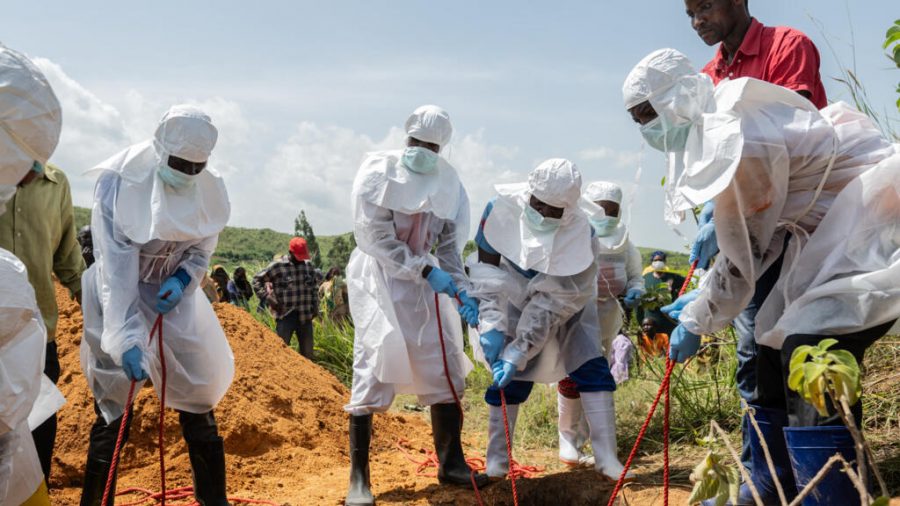
The Democratic Republic of Congo (DRC) is facing a mounting health crisis as suspected Ebola cases in its eastern regions surged past 900 over the weekend. The outbreak, exacerbated by years of armed conflict and governmental instability, has now been further strained by significant reductions in international aid funding, leaving health workers struggling to contain the spread of the deadly virus.
Health Workers Overwhelmed by Growing Caseload
Frontline health workers in the region have expressed growing concern over their ability to manage the escalating number of cases. “We are seeing a steady rise in suspected cases, and the situation is becoming increasingly dire,” said a local health official, who asked to remain anonymous for safety reasons. He cited the lack of resources, including critical medical supplies and personnel, as a major impediment to effective containment efforts.
Eastern DR Congo has long been plagued by violence and political instability, with various armed groups vying for control of the resource-rich region. This unrest has not only displaced millions of people but has also disrupted essential infrastructure, including healthcare facilities and supply chains, making it nearly impossible to mount a robust response to the outbreak.
Aid Cuts Compound the Crisis
The situation in the DRC has been further exacerbated by sweeping cuts to international aid budgets. These reductions have left many healthcare initiatives underfunded, forcing organizations to scale back their operations. According to aid workers, the cuts have had a particularly devastating impact on disease surveillance and community outreach programs—both critical components in combating an infectious disease like Ebola.
“The lack of funding means we can’t reach remote communities where the virus is spreading the fastest,” said a representative from an international health organization operating in the region. “This is not just a health crisis; it’s a humanitarian disaster in the making.”
Challenges in Community Engagement
Efforts to curb the outbreak have also been hindered by deep-seated mistrust between local communities and health authorities. In many areas, residents remain skeptical of healthcare workers and are reluctant to report suspected cases or seek medical attention. This distrust is partly rooted in a history of neglect by the central government and a perception that international aid groups prioritize their own agendas over the needs of local populations.
Health officials have emphasized the importance of community engagement in overcoming these challenges. “We need to build trust with the people we’re trying to help, and that takes time and resources we simply don’t have right now,” said one official.
International Community Urged to Act
As the crisis spirals, calls for international intervention are growing louder. Advocacy groups and health experts are urging donor nations to reconsider aid cuts and provide emergency funding to support the DRC’s response efforts. Without immediate action, they warn, the region risks a full-blown epidemic that could spill over into neighboring countries.
The World Health Organization (WHO) has also raised alarm over the situation, noting that the DRC’s health system is ill-equipped to handle an outbreak of this magnitude. In a recent statement, the WHO underscored the need for a coordinated global response, emphasizing that the fight against Ebola requires sustained financial and logistical support.
The Path Forward
Despite the challenges, health workers on the ground remain committed to saving lives and preventing the virus from spreading further. However, they caution that their efforts will amount to little without adequate resources and international backing.
As the world watches the situation in eastern DR Congo unfold, the question remains: will the global community step up to prevent another devastating Ebola epidemic, or will the region be left to face this crisis alone?