Escalating Tensions: A New Chapter in US-Iran Relations
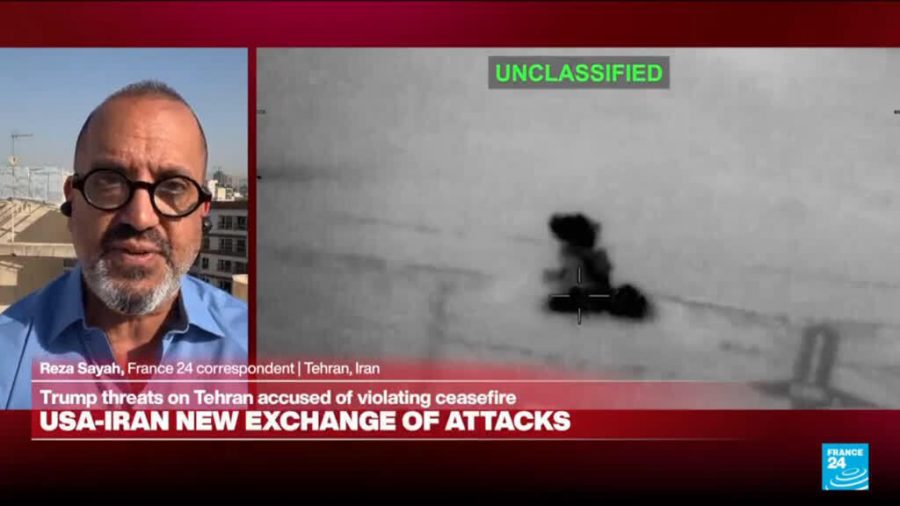
The ongoing conflict between the United States and Iran has entered a perilous new phase, as recent military exchanges suggest a breakdown in the ceasefire that many hoped would lead to lasting peace. On Sunday, Iran’s Revolutionary Guard launched targeted attacks against Bahrain and Kuwait, marking a significant escalation in the region’s already fraught dynamics. This retaliation came in response to US airstrikes on ten Iranian sites, raising concerns about the potential for a wider conflict.
Iran’s Response to US Strikes
In a statement following the attacks, Iranian officials issued a stern warning, threatening a “complete halt” to negotiations aimed at resolving the ongoing war if the United States continues its military actions. The implications of this threat are profound, as diplomatic efforts to stabilize the region could falter, plunging it deeper into chaos.
Strategic Importance of the Strait of Hormuz
The Strait of Hormuz, a critical maritime passage through which a significant portion of the world’s oil supply transits, has become a flashpoint in US-Iran relations. Recent efforts to reopen the strait without Iran’s oversight have exacerbated tensions, igniting a cycle of aggression that both sides seem eager to escalate. With each new attack, the prospect of a diplomatic resolution seems to dim further.
Regional Implications
The ramifications of this conflict extend beyond US-Iran relations, impacting neighboring countries like Bahrain and Kuwait who now find themselves caught in the crossfire. Analysts warn that these nations could become unwitting participants in a conflict that threatens to spiral out of control.
International Reactions
- United Nations Response: The UN has called for calm and urged both parties to return to the negotiating table. However, with tensions running high, it remains to be seen whether diplomacy can prevail.
- Global Oil Markets: The escalation has already begun to affect global oil prices, raising concerns about the economic implications of a broader conflict in the region.
- Allies’ Stance: US allies in the region, including Saudi Arabia and the UAE, are closely monitoring the situation, wary of Iran’s increasing assertiveness.
The Path Forward
As both sides prepare for potential further military action, the question remains: can diplomacy survive amidst such hostility? The United States and Iran must navigate a complex landscape of national interests, regional alliances, and historical grievances. The stakes are incredibly high, not only for the nations directly involved but for global stability as a whole.
In the coming days and weeks, the world will be watching closely as these events unfold. The hope is that both sides can find a way to de-escalate the situation and return to the negotiating table before it is too late.