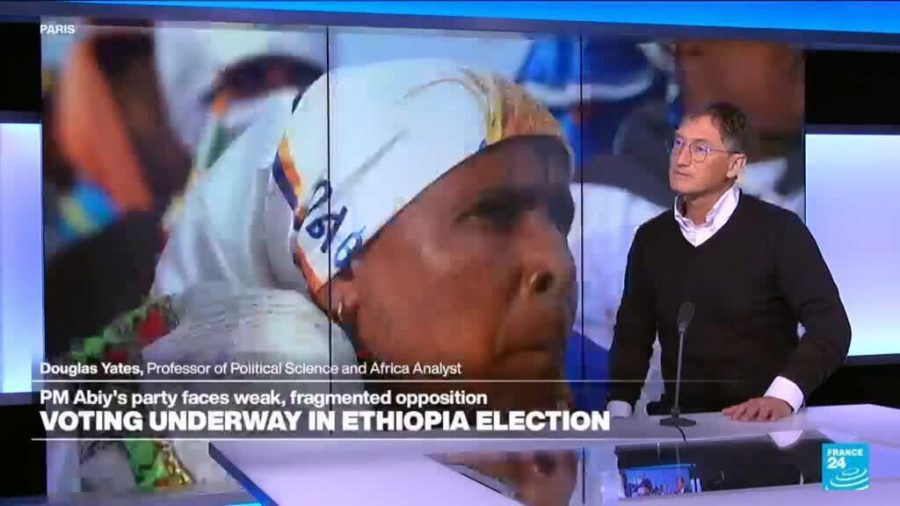
Ethiopia, one of the most rapidly growing economies in Africa, is facing a multitude of challenges that threaten to undermine its progress. Despite its impressive economic growth, the country is struggling with wealth distribution, conflict, exclusion, inflation, and uneven development. In an exclusive interview, Dr. Douglas Yates, Africa Specialist and Political Science Professor at the American Graduate School of International Relations and Diplomacy, shared his insights on the current state of affairs in Ethiopia.
Ethiopia’s Economic Growth
With a growth rate of over 8%, Ethiopia has been one of the fastest-growing economies in Africa. However, this growth has not been evenly distributed, with a significant portion of the population still living in poverty. Wealth distribution remains a major concern, with the rich getting richer and the poor getting poorer. This has led to increased inequality and social unrest.
Challenges to Ethiopia’s Elections
Amid ongoing conflict, the upcoming elections in Ethiopia have raised concerns about their fairness and freedom. While electoral procedures may function in parts of the country, conflict, exclusion, inflation, and uneven development remain the defining realities shaping Ethiopia’s political landscape. Dr. Yates argues that these challenges will have a significant impact on the outcome of the elections and the future of the country.
Perceptions of PM Abiy Ahmed
Since receiving the Nobel Peace Prize in 2019, PM Abiy Ahmed’s perception has undergone a dramatic shift. What was once celebrated as a moment of regional reconciliation has evolved into a far more complicated political reality shaped by internal rebellions and regional rivalries. Internal conflicts and regional tensions have increased, and the country is facing a multitude of challenges that threaten to undermine its progress.
Key Challenges Facing Ethiopia
Some of the key challenges facing Ethiopia include:
- Conflict: Ongoing conflict in various parts of the country, including the Tigray region, has displaced thousands of people and led to a humanitarian crisis.
- Exclusion: Certain groups, including opposition parties and minority ethnic groups, have been excluded from the political process, leading to increased tensions and social unrest.
- Inflation: High inflation rates have reduced the purchasing power of citizens, making it difficult for them to afford basic necessities.
- Uneven development: The country’s development has been uneven, with some regions experiencing rapid growth while others have been left behind.
In conclusion, while Ethiopia has made significant progress in recent years, it still faces a multitude of challenges that threaten to undermine its progress. The upcoming elections will be a crucial test for the country, and it remains to be seen whether they will be free and fair.