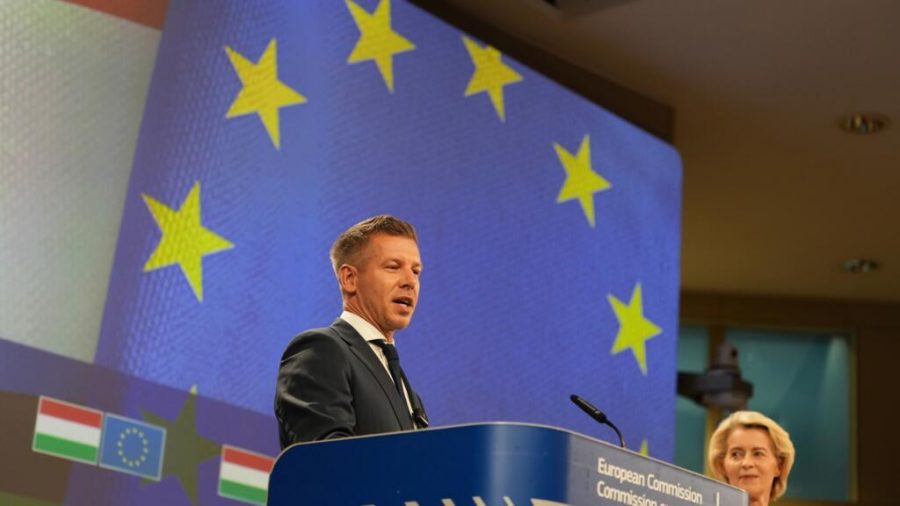
European Union to Unlock €16 Billion in Funds for Hungary
The European Union will unlock more than €16 billion in frozen funds for Hungary, EU chief Ursula von der Leyen said Friday, praising what she described as ‘long overdue reforms’ by newly elected Prime Minister Peter Magyar. The EU had frozen the funds while the country was under the leadership of nationalist premier Viktor Orban, accusing Budapest of corruption and democratic backsliding.
Background of the Frozen Funds
The European Union had frozen the funds for Hungary due to concerns over the country’s commitment to democratic values and the rule of law. The EU had accused the previous government, led by Viktor Orban, of undermining the independence of the judiciary, restricting academic freedom, and limiting the ability of civil society organizations to operate.
Reforms Under New Leadership
However, with the election of Peter Magyar as the new Prime Minister, the EU has seen significant progress in addressing these concerns. Magyar’s government has implemented a series of reforms aimed at strengthening the rule of law, increasing transparency, and promoting democratic values.
Key Reforms
- Strengthening the independence of the judiciary
- Increasing transparency in government decision-making
- Promoting academic freedom and reducing restrictions on civil society organizations
- Implementing measures to prevent corruption and ensure accountability
These reforms have been welcomed by the EU, which sees them as a significant step forward in addressing the concerns that led to the freezing of funds. The unlocking of the €16 billion in funds is expected to have a significant impact on Hungary’s economy, supporting key sectors such as infrastructure, education, and healthcare.
Reaction from EU Chief
EU chief Ursula von der Leyen praised the reforms implemented by Magyar’s government, describing them as ‘long overdue’. She emphasized the importance of these reforms in promoting democratic values and the rule of law, and expressed the EU’s commitment to supporting Hungary in its efforts to strengthen its democracy.
Implications for Hungary and the EU
The unlocking of the funds is expected to have significant implications for both Hungary and the EU. For Hungary, the funds will provide a much-needed boost to the economy, supporting key sectors and promoting economic growth. For the EU, the move demonstrates the bloc’s commitment to supporting member states that are working to strengthen their democracies and promote the rule of law.
The decision to unlock the funds is also seen as a positive step in EU-Hungary relations, which had been strained under the previous government. The move is expected to improve cooperation between the two, promoting a more positive and constructive relationship.